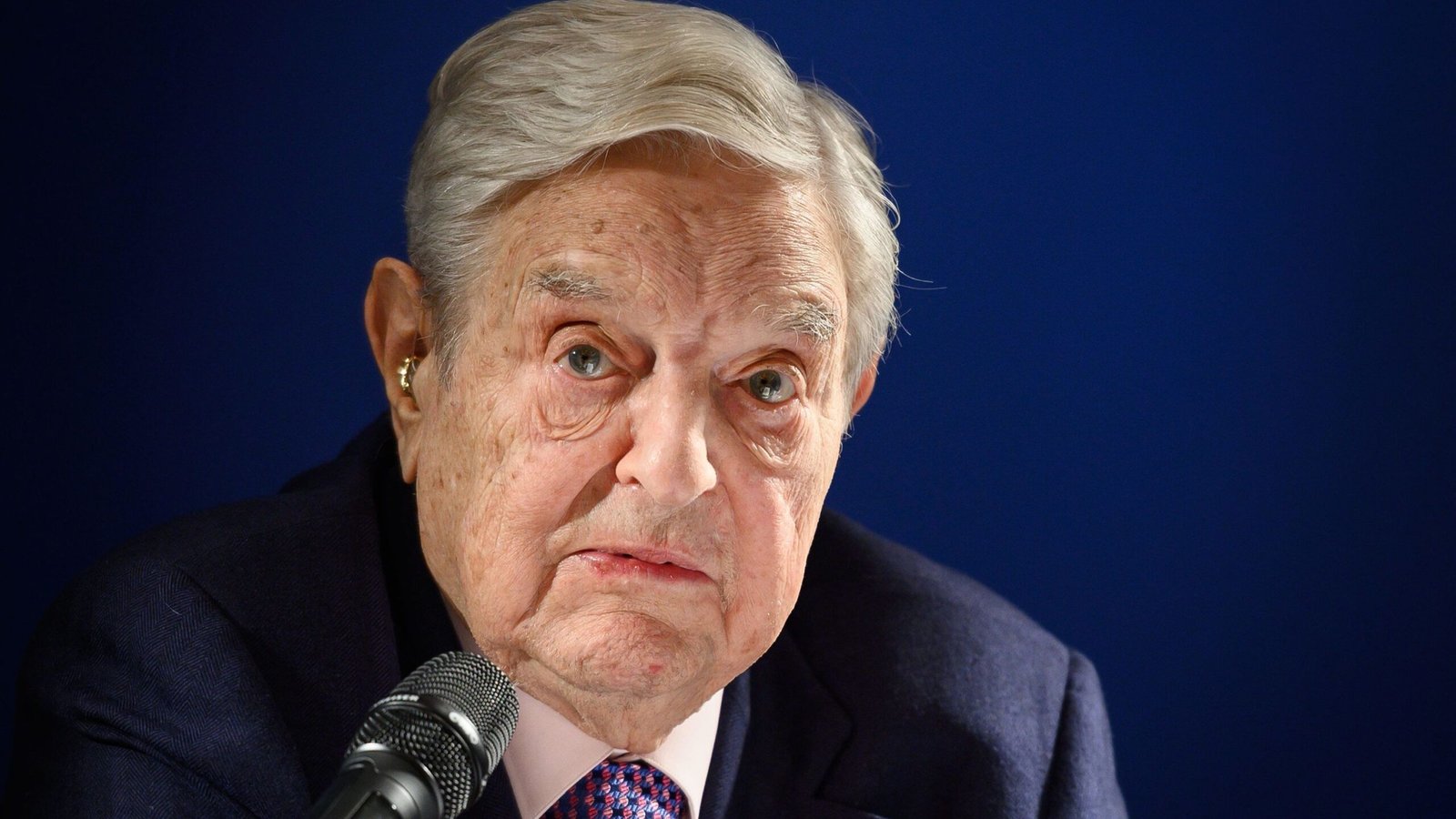
George Soros: Biography, Career, Wealth, Philanthropy, and Global Influence
George Soros is one of the most influential investors and philanthropists in modern history. Known for his remarkable success in financial markets, major charitable contributions, and involvement in international political and social issues, Soros has remained a prominent figure for decades. His life story combines ambition, intelligence, determination, and a strong interest in shaping the future of society. From surviving the challenges of World War II to becoming a billionaire investor, his journey is both extraordinary and controversial.
Over the years, George Soros has attracted worldwide attention for his investment strategies, philanthropic activities, and support for democratic institutions. Through the Open Society Foundations, he has provided billions of dollars to organizations working on education, human rights, justice, and government accountability. While supporters recognize his contributions to society, critics question the influence of his wealth and political activities.
Understanding George Soros requires looking beyond his financial achievements. His childhood, education, business career, personal philosophy, and charitable projects all played important roles in building his international reputation.
Early Life and Family Background
George Soros was born on August 12, 1930, in Budapest, Hungary. His birth name was György Schwartz, and he grew up in a Jewish family during a period of considerable political and economic uncertainty in Europe. His father, Tivadar Soros, was a lawyer and writer who had experienced difficult circumstances during World War I.
Soros spent his childhood in Hungary, where he experienced the growing political tensions that eventually led to World War II. The Nazi occupation of Hungary in 1944 created serious dangers for Jewish families. His family survived by obtaining false identity documents and taking steps to protect themselves from persecution.
These experiences had a lasting influence on his understanding of political power, individual freedom, and discrimination. Surviving such a dangerous period helped shape the ideas that later influenced his philanthropic activities.
In 1947, as Hungary came under communist control, Soros left his homeland and moved to England. This decision marked the beginning of a new chapter in his life. Although he faced financial difficulties and uncertainty, he remained determined to build a successful future.
Education and Academic Journey
After arriving in England, George Soros enrolled at the London School of Economics. His education played a major role in developing his understanding of economics, philosophy, and political systems.
During his university years, Soros studied under the influence of philosopher Karl Popper. Popper’s ideas about democracy, freedom, and open societies became particularly important to him. His book, The Open Society and Its Enemies, introduced Soros to a philosophy that would eventually inspire the name and mission of his philanthropic organization.
Life as a student was not always easy. Soros worked different jobs to support himself financially while continuing his education. These experiences helped him develop independence and a practical understanding of the challenges faced by ordinary people.
He graduated from the London School of Economics in 1952. Although his academic background was in philosophy and economics, his professional ambitions eventually led him toward the financial industry.
His education provided a foundation for the investment theories and social ideas that would become central to his career.
Beginning of His Financial Career
After completing his studies, George Soros began searching for opportunities in the financial sector. He initially worked for different financial institutions in London before moving to the United States in 1956.
His arrival in America provided access to a much larger financial market. He worked as an analyst and trader, gaining valuable experience in securities, international investments, and market behavior.
During the following years, Soros developed a reputation for understanding financial trends and recognizing opportunities that other investors sometimes overlooked.
In 1970, he established Soros Fund Management, an investment management company that eventually became associated with one of the most successful hedge funds in history.
His investment approach was different from that of many traditional investors. Instead of relying exclusively on historical information, he focused on how market expectations, investor behavior, and economic conditions influenced one another.
This approach helped him develop a distinctive investment philosophy that contributed to his long-term success.
The Success of the Quantum Fund
One of the most important achievements in George Soros’s business career was the success of the Quantum Fund. Established in 1973 with investor Jim Rogers, the fund became internationally recognized for its strong performance and unconventional investment strategies.
The Quantum Fund invested in financial markets around the world, including currencies, stocks, bonds, and other financial instruments.
Soros became particularly famous for identifying opportunities during periods of economic uncertainty. He believed that financial markets were not always perfectly rational and that investor expectations could influence the direction of prices.
His ability to recognize these patterns helped him achieve extraordinary financial results.
One of the most widely discussed events in his investment career occurred in September 1992. During the British pound crisis, Soros and his fund took a major short position against the pound sterling.
The currency came under intense pressure, and the United Kingdom eventually withdrew the pound from the European Exchange Rate Mechanism.
Soros reportedly earned approximately $1 billion from the trade, earning him the nickname “the man who broke the Bank of England.”
This event made him one of the most recognizable investors in the world and demonstrated the potential influence of large financial institutions on currency markets.
George Soros and His Investment Philosophy
George Soros developed an investment concept known as reflexivity. This theory explains how people’s beliefs and expectations can influence financial markets and how changes in markets can, in turn, affect those beliefs.
According to this idea, financial markets are not simply reflections of objective economic conditions. Investors make decisions based on expectations, emotions, incomplete information, and interpretations of events.
These decisions can influence prices and sometimes create conditions that reinforce the original expectations.
For example, when investors believe a company will become more successful, they may purchase its shares. Increased demand can push the share price higher, creating a perception that the company is becoming more valuable. This can attract even more investors.
However, the process can also work in the opposite direction when negative expectations create selling pressure.
Soros explored these ideas in his writings, particularly in his book The Alchemy of Finance. His philosophy remains an interesting subject for students of economics, professional investors, and financial researchers.
Open Society Foundations and Philanthropy
Although George Soros became wealthy through financial investments, his philanthropic activities became another defining part of his public identity.
In 1979, he began supporting educational opportunities for Black students in South Africa during apartheid. He also provided scholarships for Eastern European students and dissidents who wanted to study abroad.
In 1984, he established a foundation in Hungary to encourage access to information and support independent organizations. These early projects eventually developed into the international network known as the Open Society Foundations.
The organization supports projects related to several important areas, including:
- Education and academic opportunities.
- Human rights and individual freedoms.
- Government transparency and accountability.
- Independent journalism and access to information.
- Social justice and equality.
- Democratic institutions and civic participation.
Over the decades, Soros has contributed more than $32 billion of his personal fortune to the Open Society Foundations.
The organization operates internationally and provides grants to individuals, institutions, and independent groups working toward its stated objectives.
Its activities have supported communities in different regions, including Africa, Europe, Asia, Latin America, and the United States.
Central European University
Another important part of George Soros’s philanthropic legacy is Central European University.
Established in 1991, the university was created to encourage independent academic thinking and strengthen educational opportunities following the political changes in Eastern Europe.
The institution developed a reputation for international academic programs, particularly in social sciences, humanities, law, public policy, and related subjects.
Soros believed that education could help societies develop stronger democratic institutions and encourage critical thinking.
Central European University became an important example of how private philanthropy could support long-term educational development.
Its history also reflects the broader political and educational changes that occurred after the Cold War.
Political Influence and Public Controversies
George Soros is a highly influential but controversial public figure. His financial resources and philanthropic activities have made him a subject of debate in political discussions across several countries.
He has supported organizations, campaigns, and political causes that reflect his views on democracy, civil liberties, immigration, criminal justice, and social equality.
In the United States, Soros has contributed to political organizations and candidates, particularly those associated with progressive and liberal causes.
Supporters argue that political participation and philanthropic funding are legitimate ways to encourage democratic reforms and promote civil rights.
Critics, however, believe that wealthy individuals should have less influence over political institutions and public policy. Some have questioned the scale of his political donations and the role of private foundations in shaping public debates.
Soros has also become the subject of conspiracy theories, particularly online. Many unsupported claims portray him as secretly controlling governments, financial institutions, or international events.
Such allegations should be distinguished from documented information about his investments, charitable donations, and political contributions.
A balanced understanding of George Soros requires examining verifiable activities rather than accepting unsubstantiated claims.
Books and Published Works
George Soros has written several books discussing financial markets, economics, politics, and international relations.
His publications provide insight into his investment philosophy and his understanding of social and economic challenges.
Some notable books associated with his work include:
- The Alchemy of Finance
- The Crisis of Global Capitalism
- Open Society: Reforming Global Capitalism
- The Age of Fallibility
- The New Paradigm for Financial Markets
These books explore subjects such as financial instability, globalization, economic systems, and the importance of democratic institutions.
His writing demonstrates that his interests extend beyond investment opportunities. He has consistently discussed the relationship between financial markets, political systems, and human behavior.
For readers interested in economics and international affairs, his publications offer an opportunity to understand the thinking behind his business and philanthropic decisions.
Personal Life and Family
George Soros has maintained a relatively private personal life compared with his public reputation.
He has been married three times. His first marriage was to Annaliese Witschak, and they had three children together. His second marriage was to Susan Weber, with whom he had two sons.
In 2013, Soros married Tamiko Bolton. Their relationship has remained largely outside the public spotlight.
His children have pursued different professional interests, including business, philanthropy, and public affairs.
Among them, Alexander Soros has become particularly prominent because of his involvement in the Open Society Foundations. In 2023, Alexander succeeded his father as chair of the organization’s board.
This transition represented an important development in the future leadership of the philanthropic network.
George Soros’s Net Worth and Financial Achievements
George Soros accumulated his wealth through decades of investment activities. His success with the Quantum Fund and other financial ventures established him as one of the world’s most successful investors.
His estimated net worth has changed over time because of market conditions, charitable donations, and the value of his investments.
It is important to recognize that net worth estimates are not exact measurements of available cash. They represent the estimated value of assets after accounting for liabilities.
Soros has also transferred a substantial portion of his fortune to philanthropic activities. His donations have supported educational institutions, civil society organizations, and international initiatives.
His financial achievements demonstrate how investment knowledge and risk management can create enormous wealth. At the same time, his charitable contributions show how he has used part of that wealth to support causes that reflect his personal philosophy.
Awards and Recognition
Throughout his career, George Soros has received international recognition for his contributions to finance and philanthropy.
His work has attracted attention from academic institutions, political organizations, and human rights advocates.
He has received honorary academic recognition from universities, including institutions in the United Kingdom and the United States.
In 2018, the Financial Times named him its Person of the Year, recognizing his commitment to defending liberal democracy and supporting open societies.
In 2025, President Joe Biden awarded Soros the Presidential Medal of Freedom, one of the highest civilian honors in the United States.
These recognitions reflect the international attention surrounding his financial achievements and philanthropic work, although his public influence remains a subject of political disagreement.
The Lasting Legacy of George Soros
George Soros has created a legacy that extends far beyond financial markets. His investment career changed the way many people understand currency trading, market expectations, and international finance.
His philanthropic work has also influenced educational institutions, civil society organizations, and human rights initiatives in different parts of the world.
For supporters, his greatest achievement is the financial assistance he has provided to organizations working toward democracy, equality, and individual freedom.
For critics, his career raises important questions about wealth concentration, political influence, and the power of private philanthropy.
Both perspectives contribute to understanding why Soros remains such a significant figure in international discussions.
His experiences during World War II, education in England, financial success in America, and philanthropic activities across multiple continents created a remarkable personal journey.
Conclusion
George Soros is a fascinating figure whose life combines business success, intellectual curiosity, political engagement, and large-scale philanthropy. From his early years in Hungary to his rise as an internationally recognized investor, he has experienced major historical events and built an influential career.
His success with the Quantum Fund established his reputation in global finance, while the Open Society Foundations became the central platform for his charitable activities.
Although his political involvement and financial influence continue to generate debate, his impact on investment strategies, education, and international philanthropy cannot be ignored.
Ultimately, George Soros represents an example of how financial success can extend into broader social and political influence. His life, ideas, achievements, and controversies will likely remain subjects of discussion for future generations.

Related Posts

Gal Gadot: Biography, Career, Movies, Personal Life, and Rise to Global Stardom

Redd Foxx: The Life, Career, Comedy Legacy, and Lasting Influence of a Legendary Entertainer