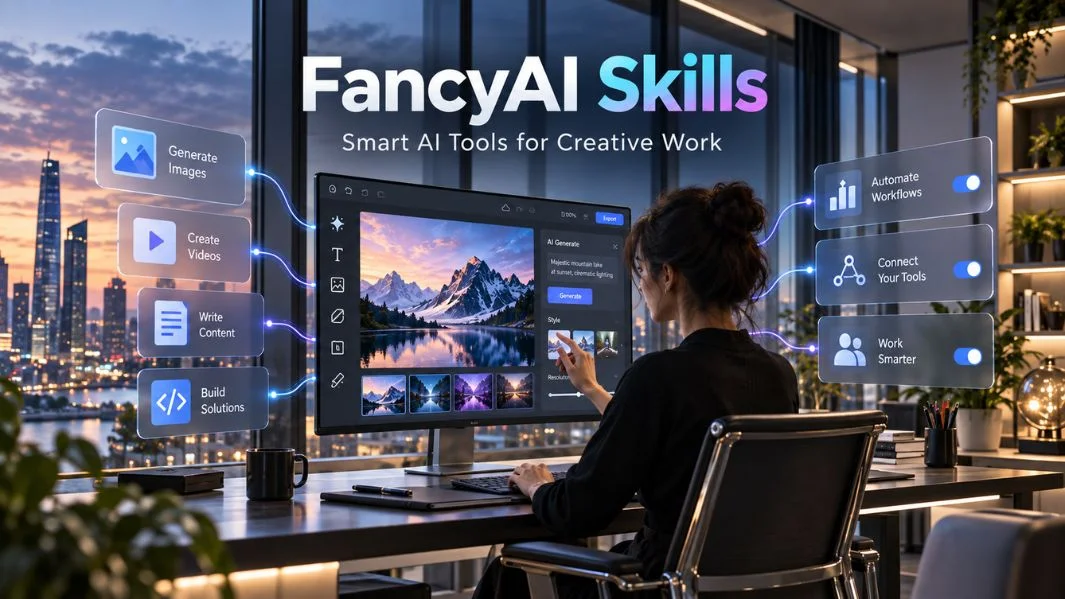
FancyAI Skills: A Complete Guide to Features, Benefits, Uses, and AI-Powered Business Solutions
Artificial intelligence is transforming the way businesses operate, create content, manage customers, and develop marketing strategies. From generating product images to automating repetitive tasks, AI-powered platforms are becoming valuable resources for companies of different sizes. One platform attracting attention in this area is FancyAI. Its specialized capabilities, commonly known as FancyAI skills, are designed to help businesses improve productivity and simplify complex creative and operational workflows.
As companies look for smarter ways to manage everyday activities, specialized AI solutions are becoming increasingly important. Rather than relying entirely on general-purpose chatbots, businesses can explore AI tools designed for specific professional responsibilities. FancyAI follows this approach by combining specialized AI experts, creative capabilities, and business integrations.
Understanding how FancyAI skills work can help business owners, marketers, designers, and technology enthusiasts determine whether the platform fits their needs. This guide explores its main features, potential applications, advantages, limitations, and future possibilities.
What Are FancyAI Skills?
FancyAI skills refer to specialized AI capabilities designed to support particular business and creative activities. These capabilities are part of a broader platform that aims to connect artificial intelligence with real business workflows.
Traditional AI chatbots generally respond to questions, generate text, or provide suggestions based on user instructions. Specialized AI skills take a more focused approach. They are designed around specific responsibilities, allowing users to work on tasks such as customer relationship management, advertising content, product launches, digital asset organization, and product design.
For example, a marketing professional might need assistance preparing advertising variations for a new product. Instead of completing every step manually, a specialized AI workflow can help organize product information and generate suitable creative materials.
Similarly, an online retailer may want to prepare product descriptions, promotional visuals, and campaign materials. AI-powered workflows can help reduce the repetitive work involved in these activities.
The main idea behind FancyAI skills is to make artificial intelligence more useful in professional environments by connecting specialized capabilities with relevant business information.
Understanding the Main Features of FancyAI Skills
FancyAI presents several specialized workflows through its desktop platform. Each capability focuses on a different area of business operations.
1. CRM Workflows
Customer relationship management is essential for businesses that want to build long-term relationships with their audiences. However, managing customer information and identifying opportunities for engagement can require considerable time.
The CRM Workflows capability is designed to help businesses analyze customer behavior, identify possible customer retention issues, and prepare personalized re-engagement campaigns.
For example, an online store may have customers who purchased products several months ago but have not returned. An AI-assisted workflow could analyze relevant customer information and help marketing teams prepare messages encouraging those customers to shop again.
This approach can make customer communication more organized and targeted.
However, businesses should review AI-generated recommendations before sending messages. Personalization must respect customer privacy and applicable data protection requirements.
2. ERP Launch
Launching a new product involves several activities, including preparing product information, creating marketing materials, organizing specifications, and developing promotional visuals.
FancyAI’s ERP Launch capability is designed to connect product information with launch-related creative workflows.
When new products are registered in an enterprise resource planning system, the workflow can help prepare materials such as product specification sheets, marketing visuals, and launch content.
This can be particularly useful for e-commerce companies that introduce new products regularly.
For instance, a clothing retailer launching a new collection may need descriptions, product information, and promotional materials for several items. AI assistance can help prepare these materials more efficiently.
The main benefit is reducing repetitive preparation while allowing employees to focus on product quality, brand presentation, and launch strategy.
3. DAM Library
Digital asset management is another important area of modern business operations. Companies often maintain large collections of photographs, graphics, promotional videos, logos, and other creative resources.
Finding the correct asset can become difficult when files are spread across multiple folders and storage systems.
The DAM Library skill is designed to help users search, organize, and reuse approved digital assets.
This capability can support brand consistency because marketing teams can work with existing approved materials instead of repeatedly creating or searching for new resources.
For example, a company preparing a seasonal advertising campaign may need product photographs, logos, and previously approved graphics. An organized digital asset workflow can make these materials easier to locate.
Effective asset management can also reduce duplicated work and improve collaboration between departments.
4. Campaign Drafting
Marketing campaigns require planning, creativity, and consistent communication. Businesses need advertising messages, landing-page content, campaign briefs, and promotional variations that match their objectives.
FancyAI’s Campaign Drafting capability focuses on helping teams prepare these materials using AI.
Users can provide relevant campaign information and product details to support the creation of different marketing ideas.
Potential outputs include:
- Advertising concepts and copy variations.
- Marketing campaign briefs.
- Landing-page sections.
- Promotional messaging.
- Creative directions for advertising campaigns.
This capability can be useful for marketing departments that manage several campaigns simultaneously.
Nevertheless, AI-generated content should be reviewed before publication. Human editors remain important for checking accuracy, tone, originality, and brand identity.
5. Performance Creative
Advertising performance depends on several factors, including audience interests, creative presentation, messaging, and campaign objectives.
Performance Creative is designed to help businesses develop new advertising concepts using information from previous creative results.
For example, if a company identifies an advertisement that generates strong engagement, its marketing team may want to explore additional versions with different headlines, images, or promotional messages.
AI can help generate these creative variations, giving marketers more ideas to test.
This approach can support advertising activities across social media and paid marketing channels.
However, successful results are never guaranteed. Every advertisement still needs appropriate audience targeting, budget management, testing, and performance evaluation.
6. Trend Monitoring
Social media trends can influence consumer interests and purchasing decisions. Businesses that understand emerging conversations may discover opportunities to develop relevant content.
FancyAI’s Trend Monitoring capability is designed to track social signals and help transform emerging topics into marketing ideas.
For example, a fashion brand might want to identify popular styles or discussions that could influence its next promotional campaign.
An AI-assisted trend workflow can help organize relevant information and suggest captions, visuals, or content plans.
This can reduce the time required to research potential topics.
However, businesses should avoid following every popular trend. A trend should match the company’s audience, communication style, and overall marketing objectives.
7. Product Design
Product development often involves studying customer preferences, examining existing designs, and exploring new creative directions.
The Product Design capability focuses on helping teams analyze design patterns, identify popular aesthetics, and explore variations.
This can be particularly relevant to fashion businesses and brands that depend heavily on visual presentation.
For example, a clothing company may want to examine popular silhouettes and explore alternative design directions for an upcoming collection.
AI assistance can provide inspiration and help teams investigate different possibilities.
However, professional designers should remain responsible for final creative decisions. Product quality, comfort, originality, manufacturing requirements, and customer expectations cannot be evaluated through automated suggestions alone.
8. Desktop Command Center
Managing several business tools can become complicated when employees need to switch between different applications.
FancyAI’s Desktop Command Center is designed to bring tools, files, connected systems, and specialized AI agents into a centralized working environment.
The purpose is to make business workflows easier to coordinate.
Instead of treating every AI activity as a separate task, companies can explore ways to connect information and creative processes.
This approach may be especially valuable for organizations that manage customer information, product records, advertising campaigns, and digital assets across multiple systems.
How FancyAI Skills Can Help Businesses
The value of specialized AI capabilities becomes clearer when considering their practical applications.
Improving productivity: Repetitive activities can consume a significant portion of an employee’s working day. AI-assisted workflows can help prepare drafts, organize information, and reduce manual effort.
Supporting marketing teams: Campaign planning and creative development often require multiple versions of the same material. Specialized AI capabilities can help generate ideas and variations.
Organizing business information: Connected workflows can make relevant customer, product, and creative information easier to access.
Supporting e-commerce operations: Online retailers frequently need product descriptions, promotional visuals, launch materials, and advertising content. AI assistance can support several parts of this process.
Encouraging creative exploration: Designers and marketing professionals can use AI-generated suggestions as starting points for developing new concepts.
These advantages depend on the quality of business information, integration configuration, and the way employees use the platform.
Which Businesses Can Benefit From FancyAI Skills?
FancyAI is particularly relevant to organizations that depend on creative production, product marketing, and connected business operations.
E-Commerce Businesses
Online retailers regularly prepare product listings, images, descriptions, and promotional campaigns. Specialized AI workflows may help organize these activities and improve production efficiency.
Fashion Brands
Fashion businesses depend on visual storytelling and product presentation. AI-assisted product design and creative capabilities may help teams explore concepts and prepare marketing materials.
Digital Marketing Agencies
Marketing agencies manage multiple clients, advertising campaigns, and creative requirements. Specialized workflows can help employees develop campaign ideas and advertising variations.
Small and Medium-Sized Businesses
Smaller companies often have limited employees and resources. AI-powered tools may help them manage repetitive creative and marketing responsibilities without immediately expanding their teams.
Enterprise Organizations
Large organizations frequently use CRM, ERP, and digital asset management systems. Connecting AI capabilities with these existing systems may support more coordinated workflows.
FancyAI Skills and Their Role in E-Commerce
E-commerce is one of the areas where specialized AI workflows can offer practical value.
Running an online store involves much more than displaying products. Business owners must manage inventory, create attractive listings, answer customer questions, prepare advertisements, and maintain consistent branding.
These responsibilities can become challenging as a store expands.
FancyAI aims to address some of these challenges by connecting creative activities with business information.
For example, product information from an existing system could support the preparation of launch materials. Approved images could be retrieved from a digital asset library. Marketing workflows could then help develop campaign content.
This connected approach may reduce the number of separate manual steps required to prepare a product for promotion.
It is important to understand that the availability and depth of individual integrations should be verified before depending on them for essential business operations.
Benefits of Using FancyAI Skills
Several potential advantages make specialized AI workflows interesting for modern businesses.
1. Better workflow organization
Bringing related activities together can make business operations easier to manage. Employees may spend less time moving information between unrelated tools.
2. Reduced repetitive work
AI can help with tasks such as drafting campaign content, preparing product information, and organizing creative materials.
3. More creative possibilities
Generating multiple concepts can help marketing professionals and designers explore ideas they might not have considered independently.
4. Improved access to information
Connections with business systems can help AI workflows use relevant information rather than relying entirely on manually provided instructions.
5. Support for business growth
Companies experiencing increasing workloads may benefit from automating suitable repetitive activities while maintaining human oversight.
Limitations and Important Considerations
Although FancyAI skills offer an interesting approach to business automation, potential users should understand their limitations.
First, AI-generated information may contain errors. Product descriptions, customer insights, and advertising messages should be checked before being used.
Second, integrations may require technical configuration. Businesses should confirm whether their existing software and systems are supported.
Third, companies need to consider data privacy and security. Connecting customer records, business documents, and internal systems requires appropriate permissions and safeguards.
Another important consideration is pricing. The total cost may depend on available services, model usage, integrations, and enterprise requirements. Businesses should review the current commercial terms before making purchasing decisions.
Finally, artificial intelligence should support employees rather than eliminate the need for professional judgment. Human creativity, strategic planning, and responsible decision-making remain essential.
How to Get Started With FancyAI Skills
Businesses interested in exploring the platform should begin by identifying the problems they want AI to solve.
Start with one specific workflow rather than attempting to automate every department simultaneously.
For example, an e-commerce company might begin with campaign drafting or product launch preparation. A marketing agency could explore performance creative capabilities.
Next, examine the existing software environment. Identify the CRM, ERP, asset management, and advertising platforms that employees already use.
After that, investigate the available FancyAI integrations and determine whether they support the required activities.
It is also important to test generated outputs with real business examples. Review their accuracy, consistency, usefulness, and quality before introducing them into everyday operations.
A gradual implementation strategy can help businesses understand the platform’s practical value while reducing unnecessary disruption.
The Future of FancyAI Skills and Specialized Artificial Intelligence
The development of specialized AI systems represents an important direction in business technology.
Early AI adoption often focused on generating answers, writing articles, and creating images. However, businesses increasingly want systems that can understand their working environments and support complete processes.
Specialized AI agents and skills are part of this transition.
In the future, platforms such as FancyAI may become increasingly valuable as connections between business software, creative systems, and intelligent automation improve.
E-commerce companies could explore more connected product launches. Marketing departments may use AI to develop and test creative variations. Customer service teams could benefit from better access to relevant information.
However, long-term success will depend on reliability, security, transparency, and measurable business results rather than the number of advertised AI features.
Frequently Asked Questions About FancyAI Skills
What are FancyAI skills used for?
FancyAI skills are designed to support specialized business and creative workflows, including customer relationship management, product launches, digital asset organization, campaign drafting, performance advertising, trend monitoring, and product design.
Is FancyAI suitable for beginners?
People familiar with basic business software and AI applications may find the platform easier to explore. However, enterprise integrations and workflow configuration may require additional technical knowledge.
Can FancyAI help with marketing?
Yes. Its advertised capabilities include campaign drafting, performance creative, and trend monitoring, which are designed to support different marketing activities.
Does FancyAI support e-commerce businesses?
E-commerce is an important use case for the platform. Its advertised workflows include product launches, creative asset management, advertising development, and product design.
Can FancyAI replace human employees?
FancyAI is better understood as a tool for supporting professional activities. Human employees remain important for reviewing information, developing strategies, maintaining customer relationships, and making final decisions.
Are FancyAI skills free?
Pricing and access can depend on the selected services and commercial arrangements. Interested businesses should check the latest pricing information directly with the platform.
Conclusion
FancyAI skills represent an approach to specialized artificial intelligence that focuses on practical business activities rather than general chatbot conversations. Its advertised capabilities cover several important areas, including CRM workflows, ERP launches, digital asset management, campaign drafting, performance creative, trend monitoring, and product design.
For e-commerce businesses, marketing agencies, fashion brands, and larger organizations, these capabilities may provide useful opportunities to improve productivity and organize creative operations.
Nevertheless, choosing an AI platform requires more than examining its feature list. Businesses should consider integration compatibility, data security, pricing, accuracy, and the actual results achieved during testing.
Ultimately, FancyAI skills highlight how artificial intelligence can become more closely connected to everyday professional work. When combined with reliable information, suitable business systems, and human expertise, specialized AI workflows may help organizations work more efficiently and approach business challenges with greater flexibility.