Arizona Real Estate News: Latest Housing Market Trends, Property Prices, and Future Opportunities
The Arizona real estate news landscape continues to attract attention from homebuyers, sellers, investors, landlords, and industry professionals. Known for its growing cities, beautiful desert communities, expanding job markets, and attractive lifestyle, Arizona remains an important destination in the American housing market. From the busy neighborhoods of Phoenix to the growing communities of Tucson, Scottsdale, Mesa, and Gilbert, the state’s property market offers a wide range of opportunities and challenges.
Real estate is an important part of Arizona’s economy. Housing construction, residential sales, commercial development, rental properties, and infrastructure projects all contribute to the state’s growth. However, changing mortgage rates, affordability concerns, population movement, and construction costs continue to influence buying and selling decisions.
For anyone following the Arizona housing market, understanding the latest developments is essential. Whether someone plans to purchase a first home, sell an existing property, invest in rental housing, or simply monitor market conditions, reliable real estate information can help support better decisions.
1. Latest Arizona Real Estate Market Trends in 2026
One of the biggest developments in arizona real estate news is the changing balance between buyers and sellers. After several years of intense competition and limited housing availability, parts of the state are experiencing a more buyer-friendly environment.
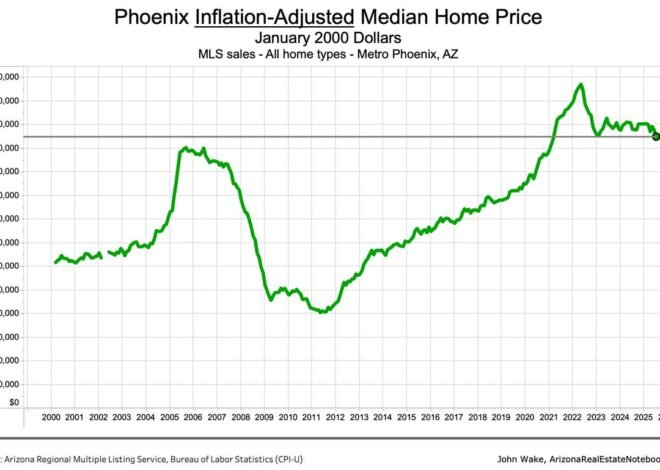
According to November 2026 reporting on the Metro Phoenix market, active listings increased by 6.8% year over year, reaching 27,427 properties in October. At the same time, listings under contract declined by 13.5%, while completed sales fell by 9.8%. The median sales price also decreased by 1.5% to $448,000. These figures indicate that buyers have more choices and sellers need to pay closer attention to pricing. AZ Big Media
This changing environment does not mean that every Arizona community is experiencing the same conditions. Some neighborhoods continue to attract strong interest because of their location, schools, employment opportunities, and lifestyle advantages. Other areas are experiencing slower activity and longer selling periods.
For buyers, increased inventory can provide an opportunity to compare properties without feeling pressured to make an immediate decision. Sellers, meanwhile, may need to improve their marketing strategies, maintain their properties, and choose realistic asking prices.
2. Phoenix Housing Market: A Major Focus of Arizona Real Estate News
Phoenix remains one of the most important cities in the state’s housing market. As Arizona’s capital and largest metropolitan center, it attracts professionals, families, retirees, students, and investors.
The city’s housing market includes everything from affordable suburban homes and townhouses to luxury residences and modern condominium developments. Its diverse property options make Phoenix an important destination for different types of buyers.
Recent market figures show that Phoenix recorded 1,034 closed residential transactions in the October reporting period, representing approximately $706.5 million in sales volume. Its median sales price was $470,000, and homes spent an average of 68 days on the market. AZ Big Media
These figures demonstrate that properties are still selling, even though the market has become more challenging. Buyers are paying closer attention to affordability, property condition, and financing costs.
Another important development is the increase in available properties. More listings can create competition among sellers, especially when multiple homes offer similar layouts, locations, and prices.
Homeowners considering selling in Phoenix should understand their neighborhood’s recent sales activity rather than relying only on statewide averages. A property close to employment centers, shopping areas, schools, and transportation may perform differently from a similar home in another location.
3. Mortgage Rates and Their Impact on Arizona Homebuyers
Mortgage rates remain one of the most important factors influencing Arizona’s real estate industry. Even a relatively small increase in interest rates can significantly affect monthly mortgage payments and the total cost of purchasing a home.
In November 2026, higher borrowing costs continued to create challenges for potential buyers. A November 13 report from AZFamily highlighted a 7.44% 30-year fixed mortgage rate in Arizona. The report also explained that the typical Phoenix household’s estimated buying power had declined as mortgage, insurance, property tax, and maintenance expenses increased. https://www.azfamily.com
For many families, the challenge is not simply finding a suitable property. It is determining whether the monthly payment remains affordable after considering all housing expenses.
Buyers should calculate their complete housing budget before beginning their property search. Important expenses include:
- Monthly mortgage principal and interest.
- Property taxes and homeowners insurance.
- Homeowners association fees.
- Maintenance and repair expenses.
- Utility bills and other ongoing costs.
- Possible mortgage insurance.
Understanding these expenses can help buyers avoid purchasing a property that places unnecessary pressure on their finances.
Some sellers may also offer closing-cost assistance, mortgage-rate buydowns, or other incentives to attract qualified buyers. However, buyers should carefully compare these offers and understand their long-term financial implications.
4. Tucson Real Estate Market and Emerging Opportunities
Tucson is another important location in Arizona’s property market. Known for its desert scenery, educational institutions, cultural attractions, and relatively different housing environment compared with Phoenix, Tucson attracts buyers looking for a range of residential options.
The city appeals to retirees, university employees, students, working professionals, and people interested in a quieter lifestyle.
Recent market analysis published in November 2026 classified both Phoenix and Tucson as balanced markets moving toward buyers. The assessment placed both metropolitan areas in the late-balanced, loosening category during the third quarter of 2026. This suggests that neither buyers nor sellers had a decisive advantage, although conditions were gradually becoming more favorable to buyers. AZ Big Media
Tucson’s housing market offers opportunities in established neighborhoods, newer residential developments, and properties on the outskirts of the metropolitan area.
However, location remains extremely important. Buyers should investigate commute times, access to healthcare, schools, road conditions, and neighborhood development before making a purchase.
Investors should also consider the rental market and potential vacancy periods. A property that appears affordable may not necessarily generate strong returns if rental demand is limited.
5. Scottsdale, Gilbert, and Chandler Property Market
Arizona’s real estate market is not limited to Phoenix and Tucson. Several surrounding communities have developed distinct identities and attract different groups of homebuyers.
Scottsdale is widely associated with luxury homes, golf communities, resorts, shopping destinations, and high-end residential developments. It attracts buyers looking for premium properties and lifestyle-oriented neighborhoods. Luxury real estate can behave differently from the broader housing market because its buyers may have different financing arrangements and purchasing priorities.
Gilbert has become a popular residential destination for families and professionals. Its suburban environment, parks, shopping facilities, and community amenities contribute to its appeal. The October reporting period recorded a median sales price of $605,000 in Gilbert, making it one of the more expensive communities covered in the report. AZ Big Media
Chandler is another important market, benefiting from its employment centers, business environment, and suburban neighborhoods. During the same reporting period, Chandler recorded a median sales price of $513,000. Its homes spent an average of 59 days on the market. AZ Big Media
These differences show why buyers should research individual cities instead of assuming that one statewide housing statistic represents every community.
6. New Construction and Residential Development Across Arizona
New construction continues to be an important part of Arizona’s housing industry. Growing communities require additional homes, roads, utilities, schools, shopping facilities, and public infrastructure.
Homebuilders are developing properties in different parts of the state to serve first-time buyers, growing families, retirees, and people relocating from other regions.
A recent development announcement highlighted new home collections in Florence, Arizona. The projects include Sage Grove at Magma Ranch and two collections at Silver Cross. Combined, the communities add more than 275 single-family homesites, with announced starting prices ranging from the low $300,000s to the upper $300,000s. Stock Titan
Florence is attracting attention because of its position within the broader Southeast Valley growth area. New residential developments may provide additional options for people who want a newly built home rather than an older property.
However, purchasing new construction requires careful research. Buyers should review the builder’s reputation, construction timelines, warranty coverage, included features, and potential upgrade expenses.
They should also examine the surrounding area. A newly constructed property may look attractive, but future convenience depends on access to transportation, schools, healthcare, employment, and everyday services.
7. Arizona Rental Market and Investment Opportunities
Arizona’s rental market is another important topic for investors and property owners. Population movement, employment opportunities, educational institutions, and lifestyle preferences all contribute to rental demand.
Phoenix, Tucson, Tempe, Mesa, Chandler, and Scottsdale each attract different rental audiences.
For example, university communities may experience demand from students and academic employees. Employment centers may attract professionals looking for convenient accommodation. Retirement communities may appeal to people seeking smaller homes and accessible amenities.
Real estate investors should avoid evaluating a rental property based only on its purchase price. A successful investment requires a detailed understanding of expected rental income and operating expenses.
Some important considerations include:
- Rental demand: Research the number of potential tenants in the neighborhood.
- Property condition: Estimate repair, renovation, and maintenance expenses.
- Location: Consider access to jobs, transportation, shopping, and schools.
- Operating costs: Include insurance, taxes, management fees, and utilities.
- Vacancy risk: Account for periods when the property may remain unoccupied.
- Long-term potential: Evaluate future development and neighborhood improvements.
Investors should also remember that property values and rental income are not guaranteed to increase. Market conditions can change, and careful financial planning is essential.
8. Housing Affordability: A Continuing Challenge
Affordability remains one of the biggest concerns in Arizona real estate news. Although additional listings may provide buyers with more choices, higher mortgage rates and other ownership expenses can make purchasing a home difficult.
First-time homebuyers often face the greatest challenges because they may have limited savings for down payments and closing costs. They must also compete with buyers who have accumulated equity from previous property purchases.
National housing figures provide additional context. According to the National Association of REALTORS®, existing-home sales declined 5.5% in October 2026 compared with September. The national median existing-home price reached $416,700, while the average 30-year fixed mortgage rate reported for October was 7.33%. nar.realtor
These national figures do not represent Arizona specifically, but they help explain the broader financial environment affecting the state’s housing market.
Potential buyers can improve their financial position by comparing mortgage lenders, reviewing available financing programs, reducing unnecessary debt, and saving for upfront expenses.
Arizona buyers may also explore eligible first-time homebuyer assistance programs. Eligibility requirements, income limits, and available funding can vary, so checking current program details is important.
9. The Importance of Location in Arizona Real Estate
Location has always played an important role in property values, and Arizona is no exception. Two houses with similar sizes and designs can have significantly different market values because of their neighborhoods.
Buyers should consider several location-related factors before purchasing a property.
Employment opportunities: Areas near major business districts and employment centers may attract professionals who prefer shorter commutes.
Education: Families often research nearby schools, educational facilities, and childcare services before selecting a neighborhood.
Transportation: Access to major roads, public transportation, and essential services can influence everyday convenience.
Climate and environment: Arizona’s desert climate makes cooling systems, shade, insulation, and outdoor maintenance important considerations.
Future development: New shopping centers, roads, commercial projects, and residential communities can influence neighborhood appeal over time.
Buyers should also investigate local zoning rules and planned infrastructure projects. These details can help them understand how a neighborhood might change over the coming years.
10. Technology Is Changing Arizona’s Real Estate Industry
Technology has transformed the way people search for properties, communicate with agents, and complete real estate transactions.
Online property listings allow buyers to explore homes without immediately visiting every location. Virtual tours, digital floor plans, online mortgage calculators, and electronic documentation have made several stages of the purchasing process more convenient.
Artificial intelligence and data analytics are also becoming increasingly important in the real estate industry. These technologies can help professionals examine property trends, identify potential customers, organize listings, and understand market activity.
Real estate agents can use digital marketing to reach buyers through online platforms, social media, email campaigns, and property websites.
However, technology should support rather than replace professional judgment. Automated property estimates may not accurately account for renovations, neighborhood differences, property conditions, or unique features.
Buyers and sellers should verify important information before making financial decisions.
11. What Arizona Homebuyers and Sellers Should Expect in 2027
Looking toward 2027, Arizona’s real estate market will likely remain influenced by mortgage rates, housing inventory, employment conditions, construction activity, and population movement.
One important question is whether borrowing costs will become more affordable. Lower mortgage rates could encourage buyers who have delayed their purchases to return to the market. However, future interest rate movements are uncertain.
Another important factor is housing supply. If inventory remains elevated, sellers may need to compete more aggressively through pricing, property improvements, and attractive transaction terms.
Buyers could benefit from additional choices and stronger negotiating opportunities if demand remains relatively weak.
New construction may also influence market conditions. Builders will need to balance construction expenses, buyer affordability, and the availability of suitable development locations.
For investors, the coming year may offer opportunities to identify properties with reasonable purchase prices and sustainable rental potential. Nevertheless, long-term investment decisions should be based on realistic financial calculations rather than optimistic market predictions.
Overall, 2027 could bring different opportunities across Arizona’s cities. Buyers and sellers should follow local housing reports instead of relying exclusively on national forecasts.
12. Tips for Following Arizona Real Estate News
Staying informed is important for anyone interested in buying, selling, or investing in Arizona property.
Here are several practical ways to follow housing market developments:
- Read monthly housing market reports to understand changes in prices and inventory.
- Follow local real estate news covering Phoenix, Tucson, Scottsdale, and surrounding communities.
- Monitor mortgage rate updates and financing conditions.
- Compare recently sold properties in your preferred neighborhood.
- Research new residential construction and infrastructure projects.
- Follow changes in rental demand and property management expenses.
- Speak with qualified real estate professionals before making major decisions.
It is also important to distinguish between confirmed market statistics and predictions. A news report may describe an expected trend, but actual market performance can be different.
Reliable information, careful research, and professional advice can help people make more informed decisions.
Conclusion
Arizona real estate news highlights an evolving housing market filled with both opportunities and challenges. Phoenix continues to play a central role in the state’s property industry, while Tucson, Scottsdale, Gilbert, Chandler, and Florence offer different residential and investment opportunities.
Recent market reports show that inventory has increased in important parts of the state, sales activity has slowed, and buyers are gaining additional negotiating power. At the same time, higher mortgage rates and affordability concerns continue to influence purchasing decisions.
For buyers, the current environment may provide more opportunities to compare properties and negotiate favorable terms. Sellers need realistic pricing strategies and effective marketing to attract serious buyers. Investors should focus on rental demand, operating expenses, location, and long-term financial sustainability.
As Arizona moves toward 2027, monitoring local market statistics and economic developments will remain essential. The state’s housing industry will continue to evolve, making accurate information and thoughtful planning valuable for anyone interested in its real estate opportunities.
Ultimately, understanding the Arizona real estate market is not simply about following home prices. It is about recognizing changing buyer preferences, economic conditions, community development, and the factors that shape the future of housing across the state.