Phoenix Housing Market: Trends, Home Prices, Forecast, and What Buyers and Sellers Should Know
The Phoenix housing market continues to attract attention from homebuyers, sellers, real estate investors, and people looking for new opportunities in Arizona. Known for its sunny weather, growing economy, expanding suburbs, and attractive lifestyle, Phoenix has become one of the most recognizable real estate markets in the American Southwest. Over the years, the city has experienced significant population growth, changing housing preferences, and fluctuations in property prices.
Whether someone is planning to purchase a first home, sell an existing property, invest in rental housing, or simply understand the real estate industry, keeping up with Phoenix housing market trends is important. Housing conditions can change depending on mortgage rates, employment opportunities, construction activity, population growth, and the balance between buyers and sellers.
Phoenix offers a wide range of housing options, from affordable suburban properties to luxury homes in desirable neighborhoods. However, buyers must also consider rising ownership costs, competition, insurance expenses, and differences between individual communities.
Understanding these factors can help people make more informed real estate decisions and recognize the opportunities and challenges shaping the local housing industry.
Current Phoenix Housing Market Conditions
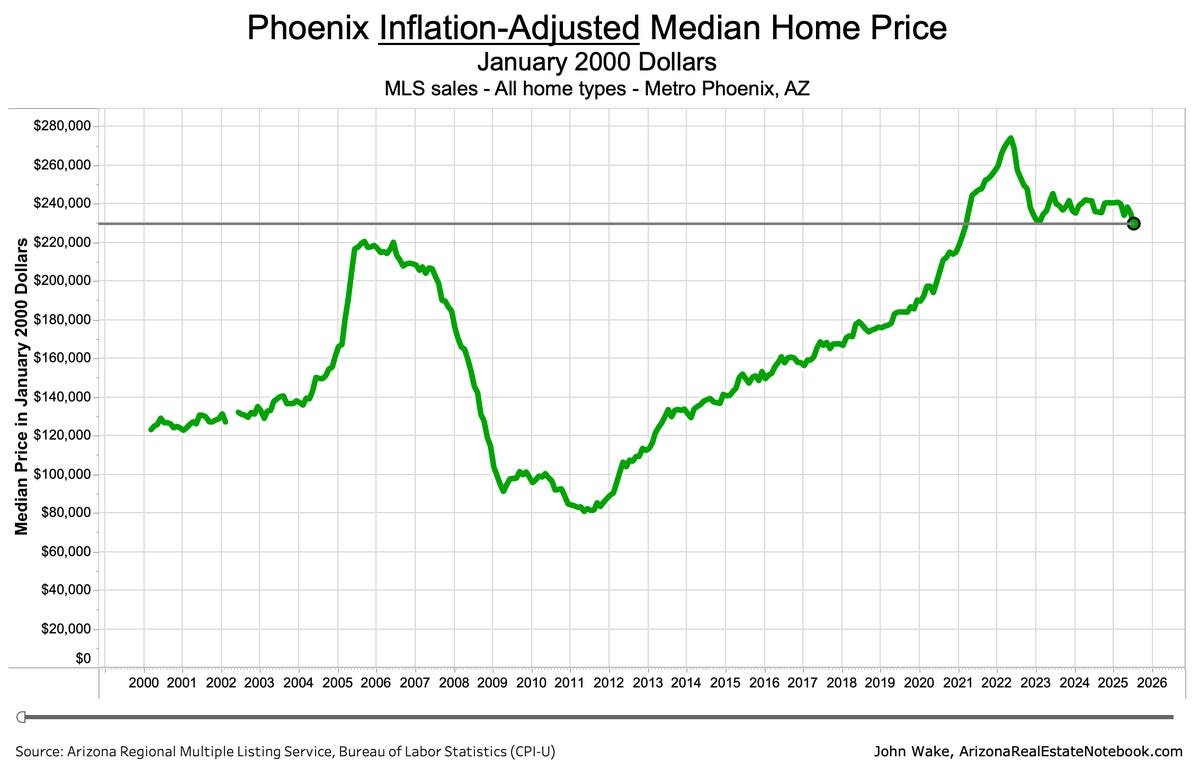
The Phoenix housing market in 2026 reflects a period of adjustment rather than the rapid price growth experienced during earlier housing booms. Buyers are becoming more cautious, sellers are adjusting their expectations, and the number of available properties remains an important factor influencing market activity.
According to Homes.com market data published in October 2026, the median Phoenix-area home sale price reached approximately $450,000 in September 2026, representing a 2.2% decline compared with the same month in 2025. Approximately 5,151 homes were sold during September, while the number of homes listed for sale stood at around 22,079.
The same report indicated that homes spent a median of approximately 67 days on the market. This suggests that buyers generally have more time to evaluate properties and negotiate compared with periods when homes sold extremely quickly.
These numbers demonstrate that Phoenix is experiencing changing market conditions. Although home values remain relatively high compared with national figures, the market is showing signs of moderation. homes.com+1
What Is Happening to Home Prices in Phoenix?
Home prices are among the most important considerations for anyone following the Phoenix housing market. Over the past several years, property values have experienced substantial changes due to population growth, limited housing availability, inflation, and mortgage interest rates.
During the pandemic-era housing boom, demand increased dramatically. Many people relocated to Arizona, while low mortgage rates encouraged buyers to enter the market. This combination contributed to rising property values across Phoenix and surrounding communities.
However, the situation has changed. Higher borrowing costs have reduced purchasing power, and some buyers are no longer willing or able to pay the prices that sellers previously expected.
In September 2026, the median home sale price in the Phoenix area was approximately $450,000. Single-family homes recorded a median price of approximately $469,600, while townhomes reached around $361,250. Condominiums had a lower median price of approximately $285,000.
These differences demonstrate why buyers should consider property types separately rather than relying entirely on the overall median price.
Although declining prices can create opportunities for buyers, they do not necessarily indicate that every neighborhood is becoming more affordable. Location, property condition, school districts, and local demand continue to influence individual home values. homes.com
Factors Influencing the Phoenix Housing Market
Several economic and demographic factors influence the direction of the local real estate industry. Understanding these influences can help buyers and sellers make better decisions.
1. Mortgage Interest Rates
Mortgage interest rates have a significant effect on housing affordability. Even when property prices remain stable, higher interest rates can increase monthly mortgage payments.
For example, a buyer purchasing a $400,000 property with a mortgage may face substantially different monthly costs depending on the interest rate, down payment, loan duration, and other financing conditions.
When borrowing becomes more expensive, some buyers postpone their purchases. Others search for smaller homes, explore less expensive neighborhoods, or negotiate more aggressively.
Consequently, mortgage rates remain one of the most important factors affecting buyer demand in Phoenix.
2. Population Growth
Arizona has attracted residents from different parts of the United States because of its employment opportunities, lifestyle, and comparatively diverse housing options.
Phoenix benefits from this movement because it offers access to employment centers, educational institutions, shopping areas, entertainment, and outdoor recreation.
Population growth can increase demand for apartments, rental homes, townhouses, and single-family properties. However, the effect depends on how quickly new housing becomes available.
When population growth outpaces construction, competition for available properties can increase.
3. Employment Opportunities
Employment conditions also influence the Phoenix housing market. People generally feel more comfortable purchasing homes when they have stable jobs and predictable incomes.
Phoenix has a diverse economy that includes healthcare, technology, financial services, manufacturing, education, tourism, and construction.
The expansion of businesses can attract new employees and increase demand for housing near employment centers.
However, economic uncertainty or slower hiring can make potential buyers more cautious about taking on long-term financial commitments.
4. Construction and Housing Supply
New construction plays an important role in determining housing availability.
Developers in the Phoenix metropolitan area continue to consider different types of residential projects, including detached homes, apartment communities, and mixed-use developments.
Additional construction can provide buyers with more choices and reduce pressure on existing housing inventory.
However, building new homes also involves challenges such as land costs, labor availability, materials, infrastructure requirements, and development regulations.
The relationship between construction and demand will remain important in determining future property prices.
Best Neighborhoods to Explore in Phoenix
Phoenix offers many residential communities with different lifestyles, property types, and price ranges. Buyers should consider their financial situation, commuting requirements, and long-term goals before selecting a neighborhood.
Here are several well-known areas worth exploring.
Arcadia
Arcadia is one of Phoenix’s recognizable residential neighborhoods. It is known for attractive homes, mature landscaping, restaurants, and convenient access to shopping and entertainment.
The area appeals to buyers who appreciate established neighborhoods and distinctive residential architecture.
However, property prices can be relatively high, making it important to evaluate individual homes carefully.
North Phoenix
North Phoenix offers a combination of established communities and newer residential developments.
Many buyers explore this area because of its access to outdoor recreation, shopping facilities, and major transportation routes.
Housing options vary considerably, allowing people to compare different property sizes, architectural styles, and budgets.
Ahwatukee
Ahwatukee is located in the southern portion of Phoenix and is known for its residential atmosphere and proximity to South Mountain Park.
The community attracts people who enjoy outdoor activities, neighborhood amenities, and suburban living.
Buyers should compare commuting distances and property maintenance costs when considering this area.
Desert Ridge
Desert Ridge is a popular area in North Phoenix with shopping, restaurants, entertainment, and residential developments.
Its location provides access to major roads and employment centers.
The neighborhood includes different housing styles, making it useful for buyers who want to compare modern properties and established residential communities.
Downtown Phoenix
Downtown Phoenix offers a different residential experience compared with traditional suburban neighborhoods.
Condominiums, apartments, and modern residential buildings provide opportunities for people who prefer urban living.
Its proximity to offices, entertainment venues, restaurants, and cultural attractions makes it particularly interesting for professionals and residents who value convenience.
Is Phoenix a Buyer’s Market or a Seller’s Market?
One of the most common questions surrounding the Phoenix housing market is whether current conditions favor buyers or sellers.
The answer depends on the neighborhood, property category, asking price, and available inventory.
In general, the market has become more balanced than it was during periods of intense competition. Buyers have more opportunities to compare properties, investigate their condition, and negotiate with sellers.
The September 2026 data from Homes.com showed approximately four months of housing supply. This indicates a market that is closer to balance than an extremely competitive seller-dominated environment.
For buyers, these conditions can provide several advantages:
- More time to evaluate available properties.
- Greater opportunities to negotiate prices.
- More flexibility when requesting repairs.
- Additional choices across different neighborhoods.
- Less pressure to make immediate purchasing decisions.
Sellers also have opportunities, but realistic pricing is increasingly important. Properties that are well-maintained, appropriately priced, and presented attractively may perform better than homes listed above comparable market values.
Ultimately, neither buyers nor sellers should assume that the entire metropolitan area behaves identically. Local market conditions can differ significantly.
Phoenix Housing Market Forecast for 2027
Looking ahead, the Phoenix housing market will likely remain influenced by mortgage rates, economic conditions, population trends, and housing inventory.
A report published by the Common Sense Institute in May 2026 suggested that Phoenix-area housing prices could remain relatively soft throughout 2026. Its analysis projected a possible 0% to 1% decline in Phoenix-area home prices during the year.
Meanwhile, Homes.com projected that Phoenix prices could finish 2026 below their 2025 levels before experiencing moderate growth in 2027.
These forecasts suggest that the market may gradually stabilize rather than experience another dramatic increase in property values.
Several developments could influence the next stage of the market.
Potential mortgage rate changes: Lower mortgage rates could encourage more households to purchase homes. However, an increase in demand could also create additional competition.
Continued employment growth: New businesses and expanding industries could attract workers, increasing housing demand in selected communities.
Housing construction: Additional residential developments could improve property availability and provide buyers with more options.
Affordability challenges: If household incomes do not keep pace with housing expenses, many potential buyers may continue postponing purchases.
It is important to remember that housing forecasts are estimates rather than guarantees. Unexpected economic developments can change market conditions quickly. commonsenseinstituteus.org+1
Tips for Buying a Home in Phoenix
Purchasing a property is a major financial decision. Buyers should prepare carefully before entering the Phoenix real estate market.
First, establish a realistic budget. Consider not only the purchase price but also mortgage payments, property taxes, homeowners insurance, maintenance, and potential homeowners association fees.
Second, compare different neighborhoods. A home that appears affordable may involve higher commuting costs or additional maintenance expenses.
Third, obtain mortgage preapproval before making serious offers. This helps buyers understand their purchasing power and makes financial planning easier.
Fourth, arrange a professional home inspection. Phoenix properties can experience specific maintenance concerns involving air conditioning systems, roofing, insulation, plumbing, and exterior materials.
Finally, avoid making decisions based entirely on expectations of future appreciation. A home should meet your financial needs and lifestyle requirements even if property values do not increase immediately.
Tips for Selling a Property in Phoenix
Homeowners planning to sell should pay attention to pricing, presentation, and marketing.
A competitive asking price is one of the most important factors in attracting potential buyers. Sellers should review recently completed transactions involving similar properties in their neighborhoods.
Preparing the home can also make a difference. Cleaning, repairing visible damage, improving landscaping, and addressing minor maintenance problems can create a better first impression.
Professional photography and accurate property descriptions can help listings attract attention.
Sellers should also be prepared for negotiations. Buyers may request repairs, closing cost assistance, or adjustments to the purchase price.
Instead of rejecting every offer that falls below the original asking price, homeowners should evaluate the overall financial terms and their personal selling goals.
Is Phoenix a Good Place for Real Estate Investment?
Phoenix remains an interesting location for real estate investors because of its large metropolitan population, economic diversity, and established residential communities.
Investors may consider several strategies, including long-term residential rentals, single-family properties, multifamily housing, and selected renovation projects.
Rental demand is influenced by employment opportunities, household formation, population movement, and the cost of purchasing a home.
However, investment decisions require careful financial analysis.
Potential investors should calculate expected rental income, vacancy allowances, property management expenses, insurance, taxes, repairs, and financing costs.
They should also research local rental regulations and evaluate the condition of individual properties.
A property with an attractive purchase price is not automatically a profitable investment. Long-term performance depends on operating expenses, tenant demand, location, and the investor’s financial strategy.
Challenges Facing the Phoenix Housing Market
Despite its opportunities, Phoenix faces several housing-related challenges.
Affordability remains a major concern for many households. Property prices, mortgage expenses, insurance, and everyday living costs can make homeownership difficult for people with limited budgets.
Another important issue is extreme summer heat. Air conditioning is essential for comfortable living, and inefficient cooling systems can increase household expenses.
Water availability is also an important long-term consideration in Arizona. Buyers and investors should pay attention to local water policies, development conditions, and the sustainability of new residential communities.
Additionally, property taxes, insurance costs, and homeowners association fees can affect the overall affordability of a home.
Understanding these challenges before purchasing can help buyers avoid unexpected financial pressure.
Final Thoughts on the Phoenix Housing Market
The Phoenix housing market is moving through an important period of adjustment in 2026. Home prices have softened compared with the previous year, sales activity has slowed, and buyers are paying closer attention to affordability.
At the same time, Phoenix continues to offer a diverse selection of residential communities, employment opportunities, and property types.
For buyers, the current environment may provide more opportunities to negotiate and compare available homes. Sellers can still achieve successful transactions by setting realistic prices and preparing their properties properly. Investors, meanwhile, should focus on long-term rental potential and careful financial planning.
The outlook for 2027 suggests the possibility of moderate market improvement, although mortgage rates and broader economic conditions will remain important influences.
Ultimately, understanding neighborhood differences, monitoring housing trends, and evaluating personal financial goals are the best ways to approach real estate decisions in Phoenix. Whether purchasing a first home, selling an existing property, or exploring investment opportunities, informed decisions will remain essential as the market continues to evolve.