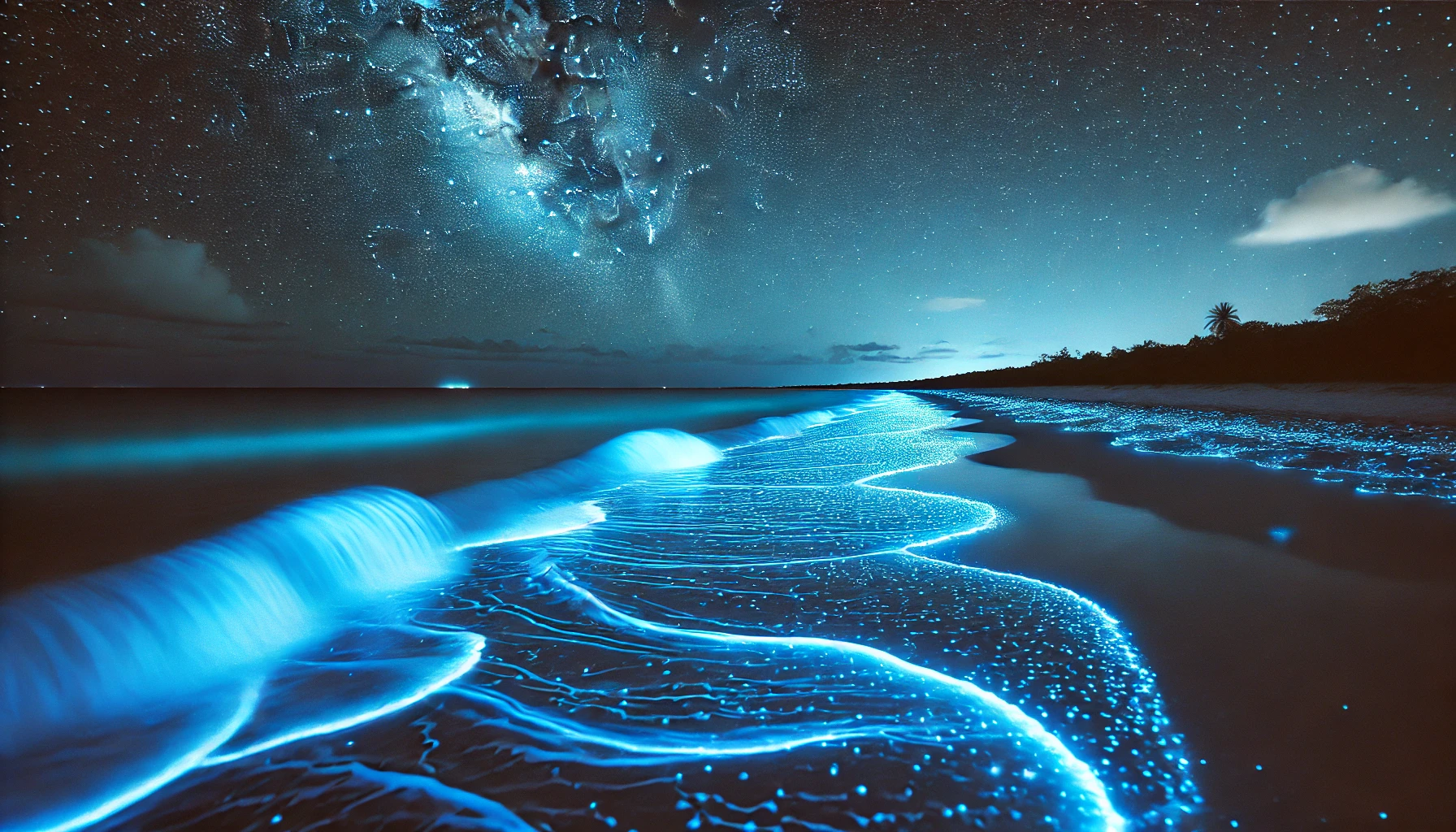
Bioluminescence Beach: A Complete Expert Guide to the Glowing Shores of the World
Have you ever imagined walking along a shoreline that lights up with every step you take? Or watching waves glow electric blue as they crash beneath a moonlit sky? If that idea excites you, then you’re already halfway into the magical world known as the bioluminescence beach. But what actually makes these beaches glow? Where can you find them? And why do they feel so unreal, almost like something out of a fantasy novel? Those are the questions we’re diving into today.
Bioluminescent beaches have grown insanely popular over the past decade, and for good reason. They’re breathtaking, mysterious, and surprisingly tied to real science rather than myth. Yet many people only know them from viral videos and pretty Instagram photos. So, let’s go deeper — casually, clearly, and with an expert lens — into what makes these glowing shores one of the coolest natural wonders on Earth.
What Exactly Is a Bioluminescence Beach?
A bioluminescence beach is a shoreline where the ocean appears to glow at night due to tiny organisms that produce light. That magical glow you see isn’t artificial, dangerous, or supernatural. It comes from natural biological processes happening inside microscopic marine life such as dinoflagellates, plankton, jellyfish species, and sometimes even algae. These organisms create a chemical reaction inside their bodies, similar to how fireflies glow on land.
The glow often appears when the water is disturbed. That includes waves crashing, fish swimming, or even your feet stepping through wet sand. The brighter the disturbance, the more dramatic the glowing effect becomes. This is why videos of glowing waves or light trails behind moving boats often go viral — bioluminescence responds instantly, and the result looks unreal.
What surprises many people is that bioluminescence isn’t rare. It actually happens all over the planet. What is rare, however, is seeing enough concentrated organisms in one location to create bright, visible glow along an entire shoreline. That’s why certain beaches become famous glowing destinations while others never will. It’s all about conditions, concentration, and the right time of year.
The Science Behind the Glow
Bioluminescence comes from a chemical reaction involving luciferin (a molecule that produces light) and luciferase (an enzyme that triggers the reaction). When these two interact inside an organism’s body, light is produced. It’s the same basic process that makes fireflies shimmer at night, though the exact chemistry varies from species to species.
For the glowing beaches specifically, the stars of the show are usually dinoflagellates — tiny plankton that light up when disturbed. Think of them like tiny ocean fireflies that react to motion instead of touch. When waves move, these organisms respond by emitting a sudden flash of blue light. Scientists think this behavior works as a defense mechanism, potentially scaring predators or attracting bigger predators to chase away the ones trying to eat the plankton.
Interestingly, the glow is never hot. It’s called “cold light,” meaning less than 20% of the energy becomes heat. That’s why marine organisms can glow without overheating. It’s also why the glow is safe to look at and enjoy, though it’s important not to disturb or harm the organisms in the process.
Another cool detail is that the brightness of bioluminescence can be influenced by multiple environmental factors. Water temperature, nutrient availability, weather conditions, tides, and even moonlight all play a role. For example, bioluminescence appears brighter on darker nights and in warmer seasons. That’s why most glowing-beach sightings happen during summer or in tropical regions where plankton thrives year-round.
Where in the World Can You Find Bioluminescence Beaches?
Bioluminescent beaches exist worldwide, but only a handful are known for consistent, bright displays. These destinations have become hotspots for travelers seeking something beyond the typical beach experience. While nature can never promise a guaranteed show, these places are often your best bet.
One famous example is Mosquito Bay in Vieques, Puerto Rico, often called the brightest bioluminescent bay in the world. Here, the water glows intensely blue with every stroke of a kayak paddle. The island protects the area well, limiting pollution and artificial light, which helps the plankton population thrive. People travel from across the globe just to witness this spectacle firsthand.
Another popular location is Ton Sai Beach in Thailand, where glowing plankton sometimes wash onto the shore. The region’s warm waters and rich ecosystems make it an excellent breeding ground for dinoflagellates. On the right night, tourists can look out and see glittering blue dots swirling in the tide, creating an effect that feels like stars floating on the ocean’s surface.
The Maldives also hosts glowing beaches, especially during late summer and early winter. Here, the glow often appears along entire stretches of shoreline, creating picture-perfect scenes that have become iconic online. The contrast between soft white sand and shimmering blue light makes these beaches look almost unreal, like they were digitally enhanced. But they’re completely natural — and stunning.
How Bioluminescence Beaches Form Naturally
Bioluminescent beaches don’t appear randomly. They form under very specific environmental conditions. Warm water is one major factor. Dinoflagellates thrive in warmer temperatures, which is why glowing beaches are more common in tropical and subtropical regions. When the water temperature drops too low, the organisms either die off or move elsewhere.
Another important factor is nutrient availability. Plankton need nutrients like nitrogen and phosphorus to reproduce and survive. These nutrients often come from ocean upwelling, river runoff, or decaying organic matter in the ecosystem. When there’s an ideal combination of nutrients and warmth, plankton blooms occur — sometimes by the billions.
Currents and tides also shape where bioluminescent organisms gather. Sometimes the glow only appears at certain times of the month because tidal movements push plankton closer to shore. If the tide is too high or too turbulent, the organisms spread out and the glow becomes weaker. If the water is too calm, the plankton don’t get disturbed enough to emit much light.
Lastly, darkness plays a surprisingly big role. The glow is always more intense when there’s minimal moonlight and no nearby artificial lighting. Even the brightest bioluminescent bay can appear dull during a full moon. That’s why many tour operators schedule visits only on moonless nights or during the darkest periods of the month.
Why People Travel Miles Just to See a Bioluminescence Beach
The appeal of a bioluminescence beach goes far beyond simple curiosity. People are drawn to glowing shores because they offer something unique, something that feels both peaceful and exhilarating. The glow itself is mesmerizing, but the experience of seeing it in person is what people often remember most.
For many travelers, the experience feels almost spiritual. Watching glowing waves roll in under a quiet night sky reminds people of how alive and mysterious the world really is. It’s a reminder that nature still has surprises, even in an age where we feel like we’ve discovered everything. The gentle shimmer of bioluminescence creates an atmosphere that feels dreamlike — magical without being artificial.
Another reason people love these beaches is the interactive nature of the glow. You can walk on wet sand and see footprints light up behind you. You can move your hand gently through the water and create a glowing trail. Some travelers say it feels like painting on the ocean with light. That kind of hands-on experience is rare in the natural world and makes visitors feel more connected to the environment.
Then there’s the photography element. While bioluminescence is notoriously tricky to capture on camera, people still try — and when the photos work, they’re stunning. Social media has helped boost the popularity of glowing beaches, but most people who see them say the real thing is far more beautiful than any picture could ever show.
The Best Times to See Bioluminescence
Timing is everything when planning a bioluminescence trip. While these ecosystems exist year-round in many places, the glow is strongest only during certain months and environmental conditions. Warmer seasons are generally best. In tropical areas like the Maldives and Puerto Rico, that means late spring through early autumn. In cooler regions, summer is usually the only glowing season.
The phase of the moon is just as important. You’ll get the brightest glow on moonless nights or when the moon is only a thin crescent. Even a half-moon can reduce visibility. That’s why many guides recommend checking local moon calendars before planning your vacation date.
Weather conditions matter too. Heavy rain can dilute or disrupt plankton populations. Strong winds often scatter them, reducing concentration. But calm, clear nights — especially after a warm day — create the perfect environment for bright blue glowing waves. Locals and tour guides usually know when conditions will be ideal, so listening to expert advice goes a long way.
If you want to boost your chances of witnessing bright bioluminescence, always avoid nights immediately following major storms. The churning waves often push plankton deeper into the water or disperse them into open sea. Give the water at least a night or two to settle before visiting.
Is It Safe to Visit a Bioluminescence Beach?
Yes, for the most part, bioluminescence beaches are very safe to visit. The organisms causing the glow don’t sting, bite, or harm humans in any way. They’re tiny and harmless. You can walk along the shore, take photos, or simply enjoy the view without any risk from the glow itself.
However, you should always be mindful of local safety guidelines. Some beaches restrict swimming during bioluminescent displays to protect the fragile ecosystem. Jumping into the water might look cool for photos, but stirring up the organisms can sometimes harm them. Responsible tourism is key here. The glow depends on healthy, thriving organisms, so preserving their habitat is essential.
Also, avoid touching or collecting glowing organisms. Not only is it harmful to the ecosystem, but it’s often illegal in protected areas. Many famous bioluminescent bays have strict regulations because human disruption has reduced visibility in the past. Fortunately, in most places, simple observation is more than enough to enjoy the experience deeply.
As always, consider basic nighttime beach safety. Bring a flashlight with a red filter (to avoid reducing your night vision and affecting the glow). Walk carefully on wet sand, and be aware of tides. Aside from that, visiting a glowing beach is one of the safest nature experiences you can enjoy.
The Connection Between Climate Change and Bioluminescence Beaches
You might be surprised to learn that climate change actually affects bioluminescence all over the world. Warmer waters can expand plankton habitats, but extreme weather patterns can also harm them. Some areas are seeing more frequent glowing events, while others are seeing declines. This imbalance is complex and unpredictable, which is why scientists continue to study the long-term effects.
Pollution also impacts bioluminescent organisms. Chemical runoff, plastics, and excessive tourism can all disrupt delicate ecosystems. When plankton populations decrease, the glow becomes weaker and less reliable. That’s why many glowing beaches now emphasize sustainable tourism and conservation efforts. Protecting these environments isn’t just good for science — it ensures these natural wonders will be around for future generations.
While climate change doesn’t eliminate bioluminescence entirely, it does shift the conditions that allow blooms to thrive. That’s why you might hear stories about new glowing beaches appearing in unexpected locations or old famous ones fading away. Nature adapts, but it also reacts to human impact, so the future of bioluminescent beaches depends heavily on how we care for our oceans today.
Tips for Experiencing Bioluminescence the Right Way
If you’re planning a trip to a bioluminescence beach, you’ll want the best experience possible. Start by researching conditions ahead of time. Local guides, tour operators, and even social media groups often provide real-time updates on sightings. This helps you avoid nights when the glow is weak or absent.
When you arrive, prioritize darkness. Turn off flashlights, avoid bright phone screens, and step away from artificial light sources. Your eyes adjust quickly, and once they do, you’ll notice the glow far more vividly than you would with any lights around.
It’s also smart to keep your expectations flexible. Nature doesn’t operate on a schedule, and bioluminescence isn’t guaranteed. Even the brightest beaches have off nights. But when the glow does appear, it’s unforgettable — and many travelers say the unpredictability actually makes the experience more meaningful.
Finally, enjoy the glow respectfully. Don’t splash aggressively, don’t chase fish, and don’t disturb the sand more than necessary. The ecosystem will remain healthier — and glowing — when visitors treat it with care.
Final Thoughts: Why Bioluminescence Beaches Are Worth the Journey
Bioluminescence beaches aren’t just beautiful — they’re living proof of how incredible our planet can be when nature is allowed to thrive. They remind us that even in a world packed with technology, some of the most breathtaking sights remain natural and untouched. Watching the ocean glow beneath your feet is an experience that stays with you, long after you’ve left the shoreline.
Whether you’re planning a trip, studying the science, or simply dreaming about glowing waves, bioluminescence beaches offer an unforgettable blend of wonder and reality. They’re magical, mesmerizing, and deeply grounding — the kind of experience everyone should have at least once.
If you’d like this same article rewritten for SEO, formatted for WordPress, or adjusted to a specific tone, just let me know — I’ve got you!