Ponas Robotas: Exploring the Fascinating World of Robots, Artificial Intelligence, and Modern Technology
Introduction to Ponas Robotas
Technology has become an essential part of everyday life. From smartphones and computers to intelligent machines and automated systems, modern innovations continue to change how people live, work, communicate, and solve problems. One interesting term that reflects this technological transformation is Ponas Robotas. The phrase brings to mind the fascinating world of robots, artificial intelligence, and machines designed to make everyday activities easier.
The words “Ponas Robotas” can be understood as “Mr. Robot” in Lithuanian. Although the expression may initially sound like the name of a fictional character, it also provides an interesting starting point for exploring the growing relationship between humans and intelligent machines.
Robots are no longer limited to science fiction movies or futuristic television programs. They are already being used in hospitals, factories, schools, research laboratories, homes, and many other environments. Some robots perform simple repetitive activities, while others use sophisticated artificial intelligence to analyze information and respond to their surroundings.
Understanding Ponas Robotas means looking beyond the idea of a machine with a human-like appearance. It means exploring how robotics is developing and how intelligent technology may influence the future.
What Does Ponas Robotas Mean?
Ponas Robotas is a Lithuanian expression that translates into English as Mr. Robot. The phrase combines two simple words: “Ponas,” meaning Mr., and “Robotas,” meaning robot.
The expression naturally creates an image of a robot with a personality. It suggests a machine that might communicate with people, complete tasks, answer questions, and participate in everyday activities.
However, the meaning of the phrase can depend on its context. It might be used as a name for a fictional robotic character, a technology-related project, an educational concept, or a general reference to robots.
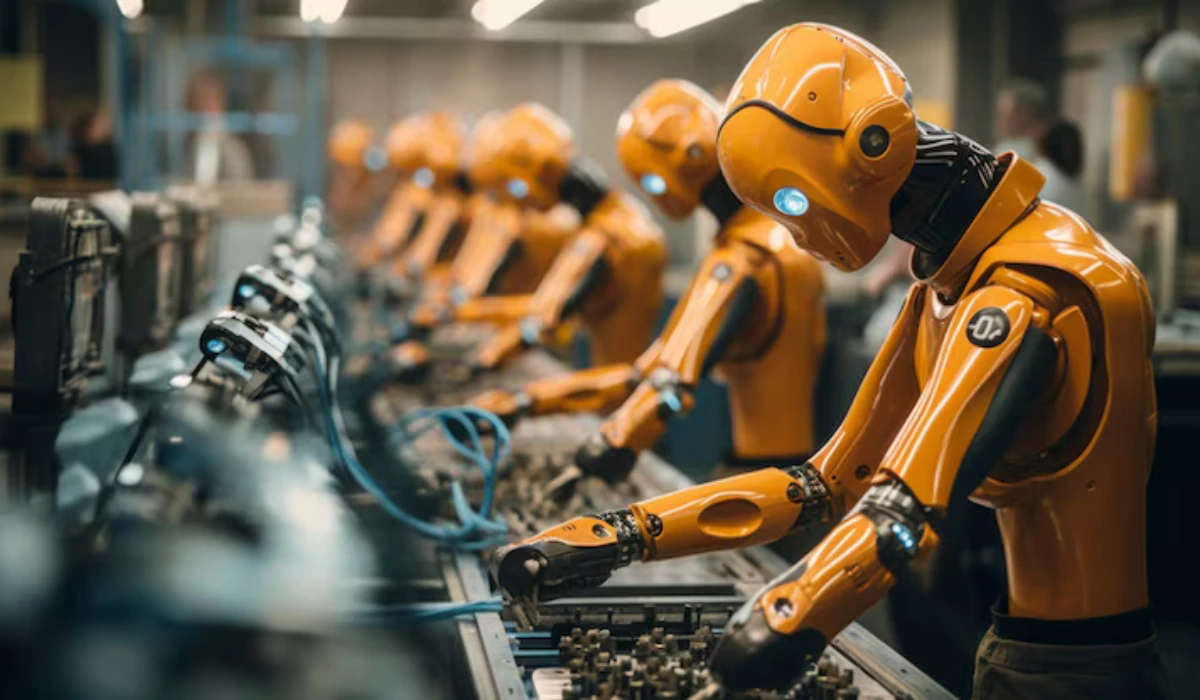
Robots have traditionally been represented as mechanical figures with metal bodies, moving arms, and electronic faces. Modern robotics, however, is much more diverse. Some robots look like humans, while others resemble small vehicles, mechanical arms, or household appliances.
The term Ponas Robotas can therefore represent a broad technological idea rather than one particular type of machine.
The Evolution of Robotics
The development of robotics has taken many decades. Early mechanical inventions were designed to perform basic movements and demonstrate how machines could imitate certain human actions.
As engineering improved, inventors began developing more practical machines. Industrial robots became particularly important during the twentieth century because manufacturers needed reliable equipment capable of performing repetitive tasks.
These machines transformed production processes by increasing efficiency and reducing the need for people to perform dangerous or physically demanding activities.
Later, advances in computer technology introduced new possibilities. Robots could be programmed to follow more complicated instructions, recognize certain objects, and respond to information collected through sensors.
Artificial intelligence brought another major development. Instead of simply following fixed instructions, some modern robotic systems can analyze data, identify patterns, and adjust their behavior according to particular situations.
This progress has transformed robotics from a specialized industrial technology into an important part of modern society.
How Artificial Intelligence Makes Robots Smarter
Artificial intelligence is one of the most important technologies influencing modern robotics. It allows computer systems to perform tasks that traditionally require human intelligence, including recognizing images, understanding language, analyzing information, and making predictions.
When artificial intelligence is combined with robotics, machines can interact with their surroundings in more advanced ways.
For example, an intelligent robot might use cameras to recognize objects in a room. Sensors can help it identify obstacles, while software processes information and determines what action should happen next.
Some robots can also understand spoken commands. This makes communication between humans and machines more natural.
Machine learning is another important part of this development. It allows computer systems to improve their performance by learning from data and identifying patterns.
However, artificial intelligence does not automatically make every robot intelligent or independent. Different machines have different capabilities, and many still require human programming, supervision, and maintenance.
The idea of Ponas Robotas represents an interesting way to imagine how these technologies might work together in the future.
Everyday Uses of Robots
Robotics has become increasingly visible in ordinary life. Many people interact with automated machines without necessarily thinking of them as robots.
One common example is the robotic vacuum cleaner. These devices can move around rooms, detect obstacles, and clean floors with limited human involvement.
Other household machines use automation to manage repetitive activities. Smart appliances can monitor conditions, follow schedules, and respond to user instructions.
Robots are also becoming more common in commercial environments. Some businesses use automated systems to organize inventory, move products, and assist customers.
In agriculture, robotic equipment can help farmers monitor crops, manage irrigation, and perform certain harvesting activities.
These applications demonstrate that robotics is not simply about creating machines that look like humans. Its real purpose is often to develop practical solutions to everyday problems.
The Importance of Robots in Healthcare
Healthcare is one of the most promising areas for robotic technology. Hospitals and medical institutions increasingly use advanced equipment to support healthcare professionals and improve certain medical procedures.
Surgical robots are an important example. They allow trained surgeons to control specialized instruments with a high level of precision. These systems can support complex procedures, although they do not independently replace the surgeon.
Robots can also assist with rehabilitation. Certain machines help patients practice movements after injuries, operations, or neurological conditions.
In addition, automated systems can transport medical supplies, organize hospital materials, and support routine logistical activities.
Another developing area is assistive robotics. These machines are designed to help individuals who experience difficulties with movement or certain daily activities.
The potential benefits are significant, but medical robotics also requires careful testing, professional supervision, patient safety measures, and responsible implementation.
A fictional character called Ponas Robotas could easily represent these positive possibilities by demonstrating how technology can support human well-being.
Ponas Robotas and Education
Education is another field where robotics can make a meaningful difference. Schools and educational organizations increasingly introduce students to robotics through practical activities and technology-based learning.
Educational robots help students understand programming, engineering, mathematics, and problem-solving.
Instead of learning everything through textbooks, students can experiment with machines and observe how different instructions produce different results.
For younger learners, simple robotic toys can introduce basic concepts such as movement, direction, sequencing, and logical thinking.
Older students may work with programmable robots that include sensors, motors, and more advanced software.
These activities encourage creativity because students must design solutions, test their ideas, and correct mistakes.
Ponas Robotas could serve as an engaging educational character for explaining difficult technological subjects in a friendly and understandable way.
A recognizable robotic character can make technology feel less intimidating, especially for children who are encountering programming and engineering for the first time.
The Role of Robots in Modern Industries
Industrial robotics remains one of the strongest examples of how automation can transform business operations.
Manufacturing companies use robots to perform activities such as welding, painting, assembling products, packaging materials, and moving heavy objects.
These machines can work with consistent precision and repeat programmed movements over long periods.
Robots are particularly useful in environments where workers might face dangerous conditions, including exposure to extreme temperatures, harmful substances, or heavy machinery.
Warehouses also benefit from automation. Robotic systems can transport packages, organize products, and support inventory management.
In the automotive industry, robots have become essential for many production processes. They help manufacturers maintain consistent quality while improving production speed.
Nevertheless, industrial automation also creates challenges. Businesses must invest in equipment, software, training, and maintenance. Workers may need to develop new technical skills as traditional job responsibilities change.
The future of industrial robotics will depend on finding an effective balance between technological innovation and human expertise.
Advantages of Modern Robotics
Robots offer several important advantages when they are designed and used appropriately.
1. Improved efficiency
Robots can complete repetitive activities quickly and consistently. This can help organizations improve productivity and manage large workloads.
2. Greater precision
Certain robotic systems perform movements with a high degree of accuracy. This is particularly valuable in manufacturing, scientific research, and medical applications.
3. Enhanced safety
Robots can perform dangerous tasks in environments where human workers might face significant risks.
4. Continuous operation
Many automated systems can operate for extended periods with scheduled maintenance and appropriate supervision.
5. Support for everyday activities
Household robots and assistive machines can reduce the effort required for certain routine activities.
6. Better access to technology-based learning
Educational robots make subjects such as programming and engineering more interactive and accessible.
These advantages explain why robotics continues to attract investment and attention across different industries.
Challenges and Concerns Associated With Robotics
Despite its many benefits, robotics also creates important questions.
One major concern involves employment. As businesses introduce automated systems, certain repetitive jobs may become less common. Although technology also creates new opportunities, workers may need additional education and training to adapt.
Privacy is another important issue. Robots equipped with cameras, microphones, and internet connections may collect sensitive information. Developers must ensure that personal information is handled responsibly.
Security is equally important. Connected robots can become vulnerable to cyberattacks if their software and communication systems are not properly protected.
There are also ethical questions surrounding artificial intelligence. People need to understand how automated systems make decisions, particularly when those decisions affect safety, employment, healthcare, or personal opportunities.
Another challenge is accessibility. Advanced robotic equipment can be expensive, making it difficult for smaller businesses and communities to benefit from the latest innovations.
These issues demonstrate why technological development should include responsible planning, transparent policies, and human oversight.
What Could the Future of Ponas Robotas Look Like?
The future of robotics is full of possibilities. As artificial intelligence, computer vision, sensors, and mechanical engineering continue improving, robots may become more useful and adaptable.
Humanoid robots are receiving considerable attention because they are designed to operate in environments created for humans. Their potential applications include assistance in warehouses, research facilities, and certain service environments.
However, creating a machine that looks human is not necessarily the most effective solution for every task. Specialized robots will remain important because they can be designed around specific requirements.
Future household robots might become better at recognizing objects, understanding instructions, and assisting with domestic responsibilities.
Healthcare robotics could also continue developing, particularly in rehabilitation, medical assistance, and hospital logistics.
In education, interactive robotic systems may provide students with more opportunities to experiment with programming and artificial intelligence.
Ponas Robotas could represent this future as a friendly symbol of technological progress. Rather than presenting robots as replacements for people, the concept can emphasize cooperation between human creativity and machine capabilities.
How Humans and Robots Can Work Together
One of the most important ideas in modern robotics is collaboration.
Although robots can perform many technical activities, humans continue to provide creativity, emotional understanding, judgment, and social awareness in ways current machines cannot fully reproduce.
For example, a robot in a hospital might transport supplies while nurses focus on patient care. In a factory, automated equipment might handle repetitive assembly while employees supervise quality and solve unexpected problems.
In education, robots can provide interactive learning experiences while teachers guide students and explain complicated ideas.
This relationship shows that robotics does not have to be a competition between humans and machines.
Instead, successful technological development should focus on combining the strengths of both.
Ponas Robotas can symbolize this cooperative relationship. A friendly robotic character can help people understand that machines are tools developed to support human goals.
Why Ponas Robotas Is an Interesting Concept
The appeal of Ponas Robotas comes from its simple but memorable expression. It combines the familiar idea of a polite title with the fascinating concept of a robot.
This combination makes it suitable for discussions about technology, entertainment, education, and digital creativity.
A character based on this phrase could be presented as a helpful assistant, a curious explorer, or an educational companion. It could explain complicated subjects using simple language and encourage children to explore science and engineering.
The concept also highlights an important cultural aspect of technology. Different languages have their own ways of describing technological developments, and expressions such as Ponas Robotas demonstrate how robotics can become part of everyday communication.
As interest in artificial intelligence grows, recognizable names and characters may help make technical subjects easier to understand.
However, it is important to distinguish between a general concept and an officially established product or character. The phrase alone does not confirm the existence of a particular robotic device, company, or entertainment project.
Conclusion
Ponas Robotas is an interesting expression that opens the door to a much larger discussion about robotics, artificial intelligence, and the future of technology. Translated as Mr. Robot, the phrase creates a friendly image of intelligent machines while reflecting the growing importance of automation in modern society.
From healthcare and education to manufacturing and household assistance, robots are already helping people complete tasks more efficiently and safely. Artificial intelligence is expanding their capabilities, creating new opportunities for innovation and collaboration.
At the same time, technological progress must be balanced with responsible development, privacy protection, cybersecurity, and appropriate human supervision.
The future of robotics will not depend only on how advanced machines become. It will also depend on how thoughtfully people choose to use them.
Ultimately, Ponas Robotas represents an engaging way to explore a world where human imagination and intelligent machines continue to shape the possibilities of tomorrow.