Jerusalem Rosary: A Sacred Bridge Between Land, Prayer, and Devotion
Prayer beads—rosaries—have been companions to Christian pilgrims, mystics, and everyday believers for centuries. But among all the rosaries, the Jerusalem Rosary holds a special place in the heart of many: it is more than a devotional tool—it is a living connection to the land where the central events of Christian faith unfolded. In this article, we’ll explore the origin, symbolism, use, benefits, and living tradition of the Jerusalem Rosary in deep detail.
What Is the Jerusalem Rosary?
When we say “Jerusalem Rosary,” what exactly do we mean? It is useful to clarify its definition, distinguishing features, and what sets it apart from other rosaries.
Definition and Core Concept
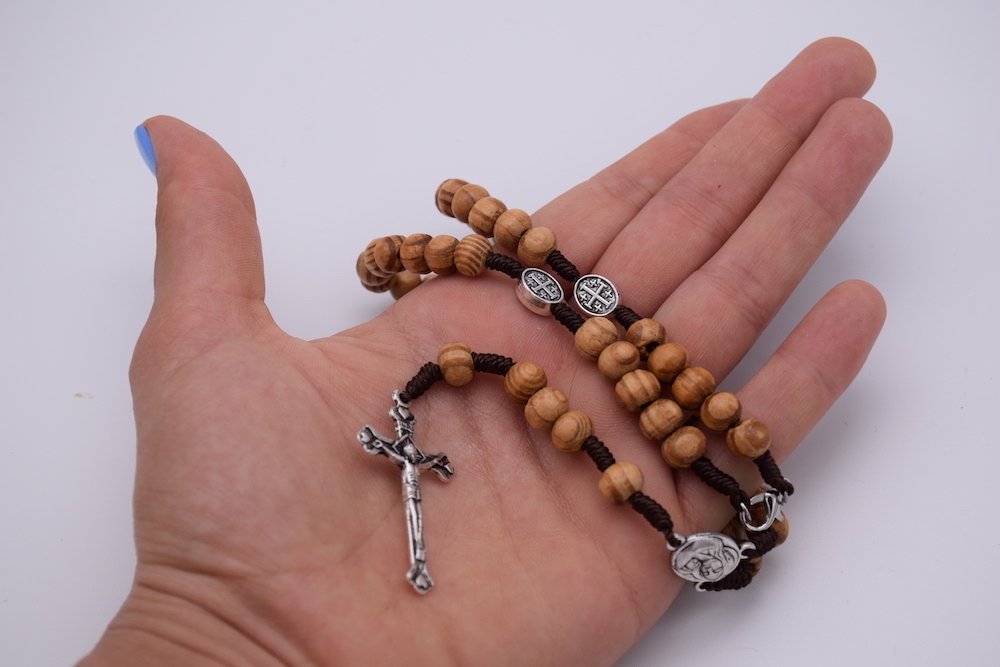
At its simplest, a Jerusalem Rosary is a rosary whose beads or components are crafted in or from the Holy Land—specifically Jerusalem or nearby. These rosaries often incorporate materials like olive wood from trees in Jerusalem or Bethlehem, or occasionally small amounts of holy soil or holy water associated with sacred sites. The idea is to embed a tangible link between the person praying and the land of Christ’s life, death, and resurrection.
Unlike ordinary rosaries, the Jerusalem Rosary carries an extra layer of meaning because its materials are steeped in the geography of Scripture. As pilgrims have long carried back small relics and stones from Jerusalem, so too these rosaries serve as sacramentals—objects that elevate spiritual attention, not as magical tokens but as aids to devotion.
Distinctive Features
What makes a rosary a genuine “Jerusalem Rosary” rather than simply any rosary with a Jerusalem motif?
- Origin of materials: The beads (or at least part of them) should be made of wood grown in the Holy Land—often olive wood—or incorporate materials from Jerusalem (soil, water, stone).
- Craftsmanship in the Holy Land: Many of these rosaries are handcrafted by artisans in Jerusalem or Bethlehem, often in Christian communities there.
- Iconography or stamps: Some Jerusalem Rosaries include medallions, crosses, or stamps that explicitly refer to Jerusalem (for example, the Jerusalem Cross). For instance, one version is “handmade olive wood bead rosary … The Blessed Mother center has a Jerusalem cross on the back; the crucifix is stamped ‘Jerusalem’.”
- Spiritual identity: For many users, a Jerusalem Rosary is not just a “rosary with a Jerusalem name,” but a spiritual conduit—prayer tied to the land, so that each bead evokes the soil, trees, and sacred events of the Holy Land.
In short, a Jerusalem Rosary is an intersection of devotion, geography, and memory.
Why It Matters
One might ask: is the extra symbolism just sentimental, or does it have real spiritual weight? From the perspective of tradition, prayer, and Christian imagination, it matters quite a lot. The physical proximity—however symbolic—anchors the prayer to real places. When one holds a bead made from a tree near Bethlehem or Jerusalem, one recalls the journey of Christ, Mary, and the apostles. That tangible connection can deepen meditation, focus, and the sense of pilgrimage—even when one is far from the Holy Land.
In what follows, we will explore how this tradition emerged, its materials and symbolism, and how one can use and preserve a Jerusalem Rosary faithfully.
Historical Roots: Rosary and the Holy Land
To understand the Jerusalem Rosary, we have to situate it in two overlapping histories: the broader history of the rosary itself, and the Christian pilgrimage tradition of linking objects to sacred places.
Origins of the Rosary Tradition
The rosary as we know it is a prayer devotion structured around reciting phrases—Our Father, Hail Mary, Glory Be—while counting beads. But its roots weave through centuries of Christian monastic and lay prayer.
- The practice of using knotted ropes or cords to count prayers goes back to early Christian monastics, especially the Desert Fathers in the third and fourth centuries.
- Because many couldn’t read Psalms or Scripture, lay Christians used a substitution: they would pray one Our Father (Pater Noster) 150 times, analogous to the 150 Psalms. Over time, the Hail Mary (Ave Maria) became more dominant in these repetitive prayers.
- By the Middle Ages, praying Marian prayers with beads or knotted cords had become widespread. The form evolved, culminating in what became the “15 decades” (Joyful, Sorrowful, Glorious Mysteries).
- According to tradition, St. Dominic in the 13th century is often credited—though historically debated—with receiving (or promoting) the rosary devotion from Mary.
- In 1569, Pope Pius V formalized the rosary structure via the papal bull Consueverunt Romani Pontifices.
- In 2002, Pope John Paul II added the Luminous Mysteries—renewing interest in a “five-mystery” structure.
So the rosary is ancient, evolving, and flexible. But the Jerusalem Rosary concept is more recent, tied to Christian pilgrimage to the Holy Land.
The Christian Pilgrimage Tradition & Holy Relics
Christianity has always had a strong pilgrimage impulse. Since the early centuries, faithful have traveled to Jerusalem, Bethlehem, Nazareth, and other biblical sites to walk the footsteps of Christ, visit holy tombs, and venerate relics. Objects brought back from these journeys—rocks, fragments, wood, water—became cherished sacred souvenirs.
Over time, local crafts in Jerusalem and Bethlehem began creating religious items that incorporate those materials: olive wood carvings, crosses made of local stone, small vials of water from the Jordan River, dust from holy tombs. These sacramentals carry meaning not because they are magical, but because they evoke the land and invite meditation.
Thus, just as pilgrims collect small stones from Jerusalem or bring a piece of holy water home, Christians began to use those materials in rosaries. The result: a prayer tool that is itself a pilgrimage memento.
Emergence of Jerusalem Rosaries
While there is no single recorded “founding moment” of the Jerusalem Rosary, it likely emerged over centuries from the merging of pilgrimage souvenir practice and the rosary devotion. Christian communities in Jerusalem and Bethlehem—especially artisan Christians—began producing rosaries using local olive wood, stone, and soil, intending them for pilgrims to take home.
Organizations such as the Franciscan Holy Land Custody and Christian shops in Jerusalem helped popularize these rosaries. For instance, The Franciscan Store markets a Jerusalem Rosary, specifying that it is handmade in Jerusalem and stamped “Jerusalem.” The Franciscan Store These shops help maintain the tradition even for those who cannot travel.
In short, the Jerusalem Rosary is a contemporary culmination of two deep traditions: the rosary prayer devotion, and the Christian practice of linking prayer with pilgrimage and sacred geography.
Materials & Craftsmanship: Olive Wood, Holy Soil, and More
One of the fascinating aspects of the Jerusalem Rosary is how its materials are carefully chosen and worked. The choice of wood, soil, iconography, and making methods all carry symbolic and devotional weight.
Olive Wood: Why It’s Preferred
Olive trees are native to the region around Jerusalem, Bethlehem, and the Galilee. They are deeply rooted in biblical imagery: olive oil, Mount of Olives, olive branches, etc. Their wood is known for durability, smooth grain, and warm color tones, making it a favorite for religious carving.
A rosary crafted from olive wood is thus not just aesthetic; it is symbolic. When you hold the beads, you hold branches of a tree that may have grown close to the region where Christ walked. Many Holy Land shops emphasize that their rosaries are made of “olive wood from Jerusalem or Bethlehem.”
Moreover, olive wood has a tactile warmth and a fine grain that makes it comfortable to hold and wear over time. The natural variation in wood ensures no two rosaries are exactly alike.
Holy Soil, Holy Water, and Embedded Elements
Some Jerusalem Rosaries take the symbolism further by embedding small quantities of holy soil, holy water, or dust from sacred sites. These additions are often sealed in small vials or miniature capsules within medallions or containers attached to the rosary.
The soil may come from the Church of the Holy Sepulchre, Golgotha, or other revered sites. The water may be from the Jordan River or springs in the Holy Land. By including these, the rosary becomes a miniature reliquary, offering a concrete connection to the land.
However, these embedded relics should not be taken as magical. Their purpose is devotional: to remind the believer of the sacred space, not to imbue the object with power by itself.
Medals, Crosses & Symbols
Beyond beads, the Jerusalem Rosary often includes medallions or symbols that visually invoke Jerusalem. The Jerusalem Cross is a popular motif. The Jerusalem Cross is a large central cross flanked by four smaller crosses, symbolizing the five wounds of Christ or the spread of the Gospel to the four corners of the earth. One olive wood rosary listing explicitly includes a small Jerusalem Cross medal.
The Blessed Mother medallion on some rosaries may have a little Jerusalem cross stamped on its reverse side. In The Franciscan Store’s version, the “Blessed Mother center has a Jerusalem cross on the back.” The Franciscan Store The crucifix itself may carry a stamp reading “Jerusalem.”
These symbols help orient the mind of the user toward Jerusalem as a spiritual center, reinforcing the tie between the prayer and place.
Craftsmanship & Local Artisans
Most Jerusalem Rosaries are handmade, by artisans in Jerusalem, Bethlehem, or nearby Christian communities. Craftsmanship matters: how the beads are shaped, sanded, polished; how the stringing is done; how the medallions are mounted.
The small Christian artisan communities in the Holy Land have centuries of tradition in wood carving, stone work, and religious art. Their skills are passed down, often in family workshops. For many, purchasing these rosaries also helps sustain Christian lives in that region.
When artisans craft a Jerusalem Rosary, they are not merely woodworking: they are translating faith into material form. Each bead, each join, and each medallion is a small prayer in wood, metal, and craftsmanship.
Thus, when someone holds a Jerusalem Rosary, they hold not just beads—but the work of hands rooted in the Holy Land, imbued with history and devotion.
Symbolism & Spiritual Meaning
What is it about the Jerusalem Rosary that gives it deeper resonance? Here we probe the symbolic and spiritual layers: land, memory, pilgrimage, and devotion.
Land as Scripture and Memory
To many Christians, the land of Israel/Palestine is not just geography—it is Scripture written in stones, trees, and hills. Jerusalem, Bethlehem, Golgotha, the Jordan—all these are embedded with the memory of Jesus’s life. A rosary made from this land becomes a miniature map of sacred memory.
Each bead, therefore, becomes a reminder: when you say the Hail Mary or move your finger to the next bead, you are not just reciting words—you are traveling mentally across the deserts, hills, and valleys where Christ journeyed. The material presence of Jerusalem wood or soil anchors the mind’s journey in a real place.
That anchoring is powerful. We humans often pray abstractly, but linking prayer to place helps ground us. The Jerusalem Rosary becomes a mini pilgrimage in hand, an embodied map of faith.
Communion with Pilgrims Past
Pilgrims through centuries have journeyed to Jerusalem, carrying with them prayers, relics, and tokens. By using a Jerusalem Rosary, a believer joins that tradition—prayer becomes communal across time. You are in a line of pilgrims, not isolated.
That sense of spiritual solidarity is a profound gift: centuries of believers have knelt at the Church of the Holy Sepulchre, visited Bethlehem, walked the Via Dolorosa. Your rosary is a whisper of that echo, binding you to their footsteps.
Mary, the Rosary, and the Holy Land
It is fitting that many Jerusalem Rosaries emphasize Marian devotion. The rosary is, in essence, a Marian prayer. Mary’s presence in the Holy Land—Nazareth, Bethlehem, Jerusalem—is central in the Gospels. Thus, combining the Marian prayer via rosary with material origin in the Holy Land draws the two threads together.
In effect, one contemplates Christ’s life through Mary’s perspective while holding beads carved from the land that those events inhabit. This deepens the intimacy of meditation: one’s fingers trace over trees from Bethlehem while thinking of Mary pondering the Word made flesh.
Sacramentals vs Magic
One must be careful: the Jerusalem Rosary is not a magical talisman. Its power does not reside in the wood or soil itself, but in what it evokes in the heart—remembrance, meditation, devotion. The Church teaches that sacramentals (objects like rosaries, scapulars, medals) help dispose the faithful toward grace but do not generate grace by themselves.
In other words, the beads don’t pray for you; they assist your prayer. The deeper spiritual meaning is unlocked by the faith and intention of the one who prays.
Symbol of Hope, Continuity, and Witness
In the modern context, the Jerusalem Rosary also becomes a symbol of Christian presence in the Holy Land. Christian communities in Jerusalem, Bethlehem, and Nazareth are often small and under pressure. The production and sale of rosaries help support those communities. Every rosary purchased is a kind of solidarity.
Thus, the Jerusalem Rosary also symbolizes continuity: the Christian story that began in that land is not just in the past; it lives in believers today. It testifies that Christian memory, witness, and prayer endure.
How to Use a Jerusalem Rosary in Prayer
At its core, using a Jerusalem Rosary is no different from using any other Catholic rosary or Marian rosary. But there are a few special sensitivities and meditative ideas you might weave in to make the experience richer.
Standard Rosary Structure
Let’s briefly recap the classic rosary structure (so that you can see where the Jerusalem context can be layered):
- Begin at the Crucifix: Usually recite the Apostles’ Creed.
- First large bead: Our Father.
- Three small beads: Three Hail Marys (traditionally for an increase in faith, hope, charity).
- Next large bead: Glory Be (and possibly the Fatima Prayer).
- Then five decades: each decade consists of 1 large bead (Our Father) + 10 small beads (Hail Mary) + Glory Be (and optional Fatima Prayer).
- Mysteries: As you recite each decade, meditate on a Mystery of Jesus or Mary (Joyful, Sorrowful, Glorious, or Luminous, depending on cycle).
- After the five decades: usually the Hail, Holy Queen and final prayers.
Over time, many have also added ingredients such as occasional Rosary novenas, per-decade intentions, etc.
Enhancing with Jerusalem Meditation
Using the Jerusalem Rosary allows you to overlay place-based imagery into your meditation. Here are ways to enrich your prayer:
- Visualizing the Holy Land: As your fingers move bead to bead, imagine you are walking along the roads of Jerusalem, Bethlehem, and Galilee. Picture the Mount of Olives, the Garden of Gethsemane, Golgotha, Calvary, the Upper Room. Let those images flow gently in your prayer.
- Linking beads to sacred scenes: For example, when you pray the Sorrowful Mysteries, imagine Jesus walking on the Via Dolorosa (which still exists in Jerusalem). When you recite the Glorious Mysteries, picture the Resurrection in the tomb under the stone. This helps the mind to dwell not only on words but on space.
- Silent pauses at certain beads: At the large beads, pause longer and imagine gazing at the Church of the Holy Sepulchre, or seeing Jerusalem’s skyline from the Mount of Olives. Let those visual pauses deepen your silence.
- Intercessions for the Holy Land: At the end of each decade, include a short prayer for peace in Jerusalem, for Christians in the Holy Land, for those suffering in that region. Because you are using a rosary from that land, it is natural to link your prayers to its present reality.
Practical Tips While Praying
- Hold the rosary reverently: Because of its symbolic and material value, many users hold the rosary with special care—gently, attentively.
- Keep your rosary nearby: Some people wear Jerusalem Rosaries as necklaces or keep them in a pouch. The frequent tactile contact can help maintain focus.
- Use it for novenas and special intentions: Because of its sacred link, many prefer to use Jerusalem Rosaries during rosary novenas or during times of spiritual urgency (e.g. for peace, healing).
- Alternate with other rosaries: You don’t have to use the Jerusalem Rosary every time. Sometimes alternate with a favorite family rosary, a sacramental rosary, or one you inherited. But when you use the Jerusalem one, allow your mind to slow down and dwell in the land’s memory.
In sum, the method is the same, but the heart of the Jerusalem Rosary experience is meditative layering: each bead carries not just the prayer formula, but the echo of stone, soil, and sacred places.
Benefits, Challenges & Practical Tips
Like all spiritual practices, praying with a Jerusalem Rosary has benefits, but also challenges. Awareness of both helps one use it wisely and sustainably.
Spiritual & Psychological Benefits
- Deeper focus and meditation
The physical material origin (stone, wood, soil) gives a tactile anchor. When you trace your fingers from bead to bead, that physical sensation helps keep the mind from wandering. Unlike a generic rosary, your mind may more easily recall the Holy Land images. - Sense of pilgrimage
Even if you cannot travel to Jerusalem, your prayers become a spiritual pilgrimage when mediated by a Jerusalem Rosary. It helps you feel connected to the land of Scripture, making your prayer more vivid. - Continuity and communal memory
Using the Jerusalem Rosary ties you into centuries of believers who have prayed in that land. This fosters a sense of communion with the Church across time, and with Christian communities in the Holy Land today. - Strengthened intercession for the Holy Land
Because your rosary is physically from the Holy Land, it’s natural to include prayers for peace, reconciliation, justice, and Christian witness in that region. Over time, that regular habit can keep the Holy Land present in your daily spiritual awareness. - Support for Christian artisans and communities
When you purchase genuine Jerusalem Rosaries crafted by local artisans, you help support Christian presence in a difficult region. Thus your use becomes a concrete act of solidarity and sustainability.
Practical Challenges & How to Overcome Them
- Authenticity concerns
Because of demand, many items claim to be “Jerusalem Rosaries” but are mass-produced elsewhere or use fake wood/soil.
Tip: Buy from reputable Christian shops in Jerusalem, Bethlehem, or trusted sellers. Ask about provenance, materials, and artisan identities. - Fragility of materials
Olive wood, small vials, or embedded soil capsules can be delicate. If dropped, beads may crack or chips may develop.
Tip: Store your rosary in a padded pouch or box. Avoid harsh chemicals or moisture. Handle with care. - Wear and tear
Over years of prayer, windings or stringing may loosen. Beads may wear smooth, joints may loosen.
Tip: Periodically check the string, and restring when needed. Many artisan rosary-makers offer repair services. - Cost considerations
Genuine Jerusalem Rosaries often cost more than mass-produced rosaries because of material, craftsmanship, and shipping.
Tip: Consider it a devotional investment. Look for smaller models, or simpler designs if cost is a constraint. - Emotional dependency risk
Some might be tempted to attribute miraculous power to the beads, rather than to God’s grace.
Tip: Always maintain a theological balance: beads are aids, not means. The power is in prayer, faith, and grace.
Tips for Best Use
- Rotate days: If you own more than one rosary, sometimes use the Jerusalem one, sometimes another, so that its use remains fresh and reverent.
- Clean gently: Use a soft, dry cloth to dust the beads—especially for olive wood. Do not saturate with water.
- Personalize prayers: At the start of each rosary, dedicate your intention to the Holy Land or Christian communities there.
- Journal reflections: After your rosary prayer, jot down what images came to mind—landscapes, scripture scenes, emotions. Over time, these reflections deepen your prayer.
By paying attention to both benefits and challenges, the Jerusalem Rosary can become a sustainable and deeply enriching spiritual companion.
Care, Preservation & Gifting
A Jerusalem Rosary is a precious spiritual object, and caring for it well ensures its longevity, beauty, and symbolic power. Also, when gifting, one wants to preserve both material quality and devotional meaning.
Storage & Preservation
- Padded container or pouch: Store your rosary in a soft, lined pouch or small box (wood, velvet, felt) to protect against knocks and dust.
- Avoid extreme humidity or dryness: Olive wood can crack or warp if exposed to severe moisture changes.
- Avoid direct sunlight: Prolonged sunlight may fade or dry out wood.
- Gentle cleaning: Use only a soft, dry cloth to wipe beads. If absolutely necessary, a barely damp cloth (water only) may be used, then immediately dried. Never use alcohol or harsh chemicals.
- Inspect periodically: Check the stringing cord, knots, and medallion attachments. If you see loosening or fraying, consider restringing sooner rather than later.
Repair & Restringing
Over time, even the best rosaries may need restringing. Many Holy Land rosary artisans or shops provide repair services. Options include:
- Replacing worn cord or wire with fresh strong thread or silk
- Re-knotting beads to better spacing
- Reattaching medallions or parts that came loose
- Repairing or replacing small vials or soil/ water capsules
When sending your rosary for repair, describe any special embedded relics so the artisan works carefully and restores it with respect.
Gifting a Jerusalem Rosary
Gift-giving is a beautiful way to pass on devotion. Here are best practices:
- Include a provenance note: When gifting, include a small card describing the material origin (olive wood from Bethlehem, soil from Jerusalem, artisan workshop). That roots the gift in story.
- Encourage care: Add a note on handling, storage, and occasional maintenance. The recipient will appreciate guidance.
- Accompany with a prayer book or guide: Pair the rosary with a rosary meditation booklet or scriptural rosary guide to help usage.
- Blessing: Ask a priest to bless the rosary before gifting, making it a sacramental for the recipient.
- Framing or display: Some gifts come with decorative cases or frames to allow display when not in use, which also protects the beads.
Gifting a Jerusalem Rosary is more than giving beads—it’s passing on a spiritual legacy.
Jerusalem Rosary in Contemporary Christian Life
How does this tradition live and evolve today? Let’s look at modern usage, community, and challenges.
Popularity and Accessibility
Thanks to Christian bookstores and online shops, Jerusalem Rosaries are accessible globally. Faithful from places far from the Holy Land can own a rosary made in Jerusalem or Bethlehem. For instance, many shops market “Jerusalem Rosaries” worldwide. This accessibility helps popularize awareness of the Holy Land in Christian devotional life.
Role in Pilgrimages & Souvenirs
For pilgrims who journey to Jerusalem, purchasing a Jerusalem Rosary is often part of the pilgrimage ritual. A pilgrim may walk the Via Dolorosa or visit the Basilica of the Holy Sepulchre, then buy a rosary made nearby, thereby sealing their pilgrimage in their hands. The rosary thus becomes a physical souvenir, but also a spiritual anchor to their journey.
Contemporary Challenges
Christian communities in the Holy Land face various socio-political, economic, and security challenges. The Christian population has declined in recent decades due to emigration, political instability, and economic pressures. In that context:
- The production of Jerusalem Rosaries is not just devotional, but also economic support for minority Christian artisans and families.
- However, supply, shipping, customs, and authenticity issues complicate matters. Some artisans struggle with export logistics or financing.
- Mass-produced “Jerusalem Rosaries” made elsewhere (in China or Southeast Asia) undercut local craft and dilute the symbolic value.
Thus, discerning buyers often try to support genuine local artisans and fair trade.
Jerusalem Rosary Sisters & Spiritual Orders
One notable religious influence is Saint Marie-Alphonsine Danil Ghattas, a Palestinian Christian nun born in Jerusalem, who founded the Dominican Sisters of the Most Holy Rosary of Jerusalem (the “Rosary Sisters”). She emphasized Marian devotion and the rosary in her ministry. Her life is a living testimony to the rosary and the Christian witness in Jerusalem rooted in its land.
These sisters, and similar communities, help maintain rosary devotion in education, catechesis, and social outreach in Jerusalem, Bethlehem, and surrounding regions. Their life is a reminder that the Jerusalem Rosary is not just a private devotional object but part of a living Christian fabric.
Integration with Modern Technology & Media
Some Christian websites, blogs, and shops devote pages to explaining the Jerusalem Rosary—its meaning, materials, how to choose, etc. For instance the “Jerusalem Rosaries” shop presents each rosary as telling a unique Jerusalem story. Another site describes the Jerusalem Rosary as a “sacred symbol of faith, devotion, and prayer, crafted from Holy Land olive wood.” These digital presences help explain, promote, and preserve the tradition in a globalized Christian world.
Social media sometimes features testimonies: pilgrims posting photos of Jerusalem Rosaries, sharing how they smell like roses or evoke memories. One Reddit user recounted receiving a rosary from Jerusalem that “even smells like roses.” Reddit Such anecdotes highlight the emotional and sensory ties that users feel.
Interdenominational Appreciation
While the rosary is especially Catholic, Jerusalem Rosaries often attract appreciation beyond Catholic circles. Some Orthodox or Anglican Christians use them, particularly as a symbol of pilgrimage or Christian heritage in the Holy Land. The emphasis is not always on Marian theology but on the land connection.
This interdenominational appeal helps build bridges: the Jerusalem Rosary becomes a thread in shared Christian memory of the Holy Land.
Famous Stories, Miracles, and Testimonies
Devotional objects often carry stories, and the Jerusalem Rosary is no exception. Here are some memorable testimonies and narratives (some legendary, some more documented) that help illustrate its living significance.
Testimony: Smell & Memory
One Reddit user’s story:
“I got a rosary from Jerusalem … it even smells like roses.” Reddit
This may reflect residual scent from rose-petals or natural materials, or simply the emotional power of association. Yet such stories underline how a Jerusalem Rosary can awaken memory, harness senses, and deepen devotion beyond words.
Legacy of Rosary Sisters & Spiritual Witness
Saint Marie-Alphonsine Danil Ghattas (1843–1927) is one of the most significant figures tied to the rosary in Jerusalem. As founder of the Dominican Sisters of the Most Holy Rosary of Jerusalem, she committed her life to education, catechesis, and the service of the poor, particularly under Ottoman and later British Mandate rule.
Because her order is named for the rosary and rooted in Jerusalem, she is sometimes invoked in connection with the spiritual heritage that the Jerusalem Rosary embodies.
Her canonization (2015) stands as a modern applause to the rosary tradition in Jerusalem and in Palestinian Christian life.
Symbolic Persistence under Persecution
In recent years, Christian communities in the Holy Land face economic and social challenges. Yet they continue to produce and maintain Jerusalem Rosaries. The act itself is a form of witness—praying with beads from Jerusalem even in strife. Some local shops quietly share stories of supporting families through rosary craft, sustaining Christian presence.
In this way, every genuine Jerusalem Rosary becomes a story: a Christian family in Bethlehem carving beads, a pilgrim walking the Via Dolorosa and buying a rosary, a person in another continent holding beads from that land in their hands as they pray.
Legends & Miraculous Claims (with Caution)
As with many religious objects, some claim miraculous healings or answered prayers associated with Jerusalem Rosaries. Most of these are anecdotal and not formally documented by Church authorities. While believers may treasure such testimonies, one must always remain discerning.
If someone claims a particular Jerusalem Rosary cured illness or shielded danger, that claim is personal and spiritual rather than objectively certifiable.
Nevertheless, the strength of the Jerusalem Rosary tradition lies not in proven miracles, but in the quiet constancy of prayer, memory, and spiritual connection.
Conclusion: More than Beads — A Living Tradition
The Jerusalem Rosary is one of those rare devotional bridges that binds together prayer, place, memory, and community. It invites us to pray not only with lips and minds, but with fingers touching wood, soil, and symbols connected to Scripture’s geography.
Here are a few concluding reflections:
- The Jerusalem Rosary reminds us that faith is embodied. Our beliefs are not abstract—they happen in places, soils, landscapes, buildings. Praying with beads from that land invites us to inhabit the geography of salvation.
- It reminds us that memory matters. In Christian prayer, we remember Christ’s life, death, and resurrection—but we do so in connection with real places. Holding a bead from Bethlehem or Jerusalem keeps memory alive.
- It expresses solidarity. By supporting Christian artisans, by praying for peace in the Holy Land, we connect our prayers to ongoing struggles and hopes of people today.
- It fosters continuity. Each time we pray, we join a line of pilgrims, martyrs, saints, and believers who have knelt in Jerusalem, walked its streets, and prayed its prayers. Our rosary is a small echo in that vast communion.
- It is a spiritual aid, not a magic wand. The power is not in the wood or soil, but in the prayer, faith, and grace invoked. The beads assist our focus, but God answers prayer.
If you choose to get a Jerusalem Rosary, use it with reverence. Touch the beads gently. Pause at the medallions. Imagine the streets of Jerusalem, the Mount of Olives, the empty tomb. Let your prayer become a pilgrimage in your heart.
If you like, I can help you pick a good Jerusalem Rosary (trusted shops, types, how to spot authenticity), or write a shorter version of this article for a blog. Do you want me to prepare that for you now?