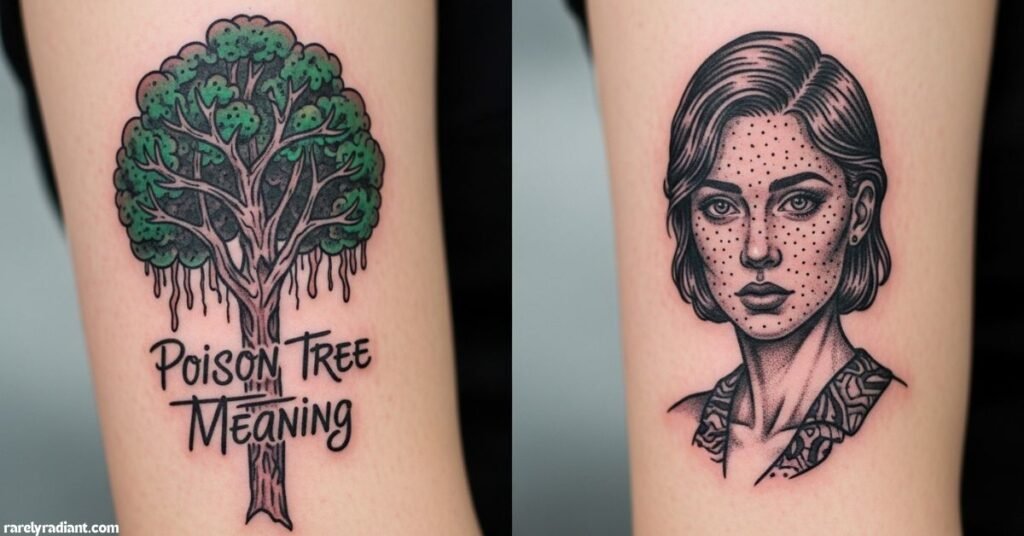
Poison Tree Tattoo Meaning: Symbolism, Strength, Healing, and Hidden Emotions
What makes a tree poisonous, mysterious, and dangerous enough to become a meaningful tattoo? The poison tree tattoo meaning can be surprisingly deep because this design often represents more than darkness or danger. For many people, a poison tree tattoo symbolizes hidden emotions, painful experiences, personal growth, betrayal, survival, and the complicated relationship between beauty and danger.
Trees have appeared in mythology, literature, religion, and art for centuries. They commonly represent life, wisdom, strength, family, and personal growth. However, a poison tree carries a much darker and more complex message. It can represent something beautiful on the outside while hiding pain, anger, or danger beneath the surface.
Because of this contrast, the poison tree tattoo has become an interesting choice for people who want body art with emotional depth. The design can be dark and dramatic, but it can also represent healing and transformation.
Understanding the Poison Tree Tattoo Meaning
The central poison tree tattoo meaning often revolves around the idea that emotions can grow when they are hidden instead of expressed. A tree does not become large overnight. It develops slowly through time, just as resentment, sadness, anger, or fear can grow inside a person.
For some people, the tattoo represents emotional pain that remained unspoken for too long. They may have experienced betrayal, heartbreak, abuse, disappointment, or another difficult chapter in life. Instead of immediately confronting those feelings, they may have carried them silently.
Over time, those emotions can become heavier.
The poison tree tattoo can therefore serve as a reminder that hidden feelings can grow into something destructive. At the same time, the tattoo may also represent awareness. The person wearing it understands the danger of allowing pain to remain buried.
This makes the design both dark and meaningful. It does not simply celebrate negativity. Instead, it can acknowledge the reality of emotional struggles and the importance of confronting them.
The Connection Between Anger and Growth
One of the most common interpretations of a poison tree comes from the idea of anger that grows when it remains hidden. Anger itself is a natural human emotion. Everyone experiences it at some point. Problems can arise when anger is ignored, denied, or allowed to build without healthy expression.
A poison tree tattoo may symbolize this emotional process.
The roots can represent the original cause of the anger. Perhaps it began with a betrayal, a broken relationship, or an unfair experience. The trunk may represent the strength of the emotion as it develops. Meanwhile, the branches can symbolize the many ways unresolved feelings spread into different areas of life.
The tattoo can act as a personal warning.
It may remind the wearer not to allow resentment to control their decisions. Instead, they may choose honesty, communication, and emotional healing. In this interpretation, the poison tree tattoo becomes a symbol of self-awareness.
A Symbol of Hidden Pain
Pain is not always visible to other people. Someone can appear confident, successful, and happy while privately carrying difficult memories.
This is another powerful poison tree tattoo meaning.
The outside of the tree may appear beautiful and strong. Its branches may stretch outward, and its leaves may look healthy. However, the idea of poison introduces something dangerous beneath that beauty.
For tattoo wearers, this contrast can feel deeply personal.
The design may represent experiences that others cannot see. It can symbolize emotional scars that remain hidden beneath a calm exterior. In this way, the tattoo becomes a reminder that people often carry stories that are invisible to the world.
It can also encourage empathy.
A poison tree tattoo may remind both the wearer and others that appearances do not always reveal the complete truth. Everyone may be fighting struggles that remain unseen.
Poison Tree Tattoos and Betrayal
Betrayal is another theme commonly connected with poison imagery. Trust can take years to build but only a moment to destroy. When someone experiences betrayal, the emotional effects may remain long after the event itself has ended.
A poison tree tattoo can represent the aftermath of broken trust.
The tree may symbolize a relationship that once appeared healthy but eventually became harmful. The roots can represent the beginning of that relationship, while the poisoned elements represent the damage that developed over time.
Some people choose this tattoo after leaving a toxic friendship, relationship, or environment.
However, the tattoo does not have to represent remaining trapped in the past. It can also symbolize survival. The wearer has recognized the poison and chosen to move forward.
Therefore, the design can represent both pain and strength.
The Beauty and Danger Contrast
One reason the poison tree is such a fascinating tattoo concept is the contrast between beauty and danger.
Trees are naturally beautiful symbols. They can represent peace, nature, stability, and life. Poison, on the other hand, represents danger, destruction, and something that must be handled carefully.
Combining these two ideas creates a powerful visual and emotional contrast.
A beautiful tree may have dark roots. Bright leaves may hide poisonous fruit. Flowers may appear delicate while representing danger. This allows tattoo artists and wearers to create designs with multiple layers of meaning.
The tattoo can suggest that not everything beautiful is safe.
Likewise, not everything dangerous appears frightening at first. This interpretation can relate to relationships, personal experiences, temptations, or life decisions.
For some people, the poison tree tattoo represents wisdom gained through experience. They have learned that appearances can be misleading.
Poison Tree Tattoo Meaning and Personal Transformation
Although the phrase “poison tree” sounds negative, the tattoo can also represent transformation.
A person may choose this design after surviving a difficult period in life. The tree can symbolize the version of themselves that developed through pain. The poison represents the harmful experiences they encountered, while the tree represents their ability to continue growing.
This interpretation is especially powerful because it does not erase the past.
Instead, it acknowledges that difficult experiences can leave permanent marks while still allowing a person to become stronger. The tattoo becomes a visual representation of resilience.
A damaged tree can continue growing.
Its branches may be broken, but new leaves can still appear. Its trunk may carry scars, but its roots may remain strong.
For this reason, some poison tree tattoo designs include new growth, flowers, birds, or sunlight. These elements can transform the meaning from pure darkness into a story of recovery.
The Symbolism of Poisonous Fruit
Many poison tree tattoo designs include fruit.
The fruit can represent temptation, consequences, or hidden danger. Something may look attractive and desirable but ultimately cause harm.
This interpretation connects the tattoo to difficult choices.
Perhaps the wearer once pursued something that seemed beneficial but eventually became destructive. The fruit serves as a reminder to think carefully about what appears tempting.
In another interpretation, poisonous fruit can represent the results of unresolved emotions.
If anger, resentment, or pain continues to grow, the eventual consequences may affect relationships and decisions. The fruit represents what the emotional tree eventually produces.
This makes the tattoo a powerful symbol of cause and effect.
What we allow to grow inside us may eventually influence the world around us.
Dark Poison Tree Tattoo Designs
A dark poison tree tattoo usually focuses on dramatic imagery. The tree may have twisted branches, exposed roots, dead leaves, or blackened bark.
These designs often emphasize emotional pain, darkness, and survival.
A dark tattoo does not necessarily mean the wearer has a negative personality. Instead, it may represent their willingness to acknowledge difficult experiences.
Many people find strength in embracing every part of their story, including the painful chapters.
Common elements in darker designs include:
- Dead branches
- Black roots
- Poisonous fruit
- Snakes
- Ravens or crows
- Skulls
- Thorny vines
- Dark clouds
- Broken branches
Each element can add another layer of symbolism.
For example, a raven may represent mystery or intelligence, while a snake may symbolize danger, transformation, or temptation. A skull can represent mortality or the end of a difficult chapter.
A Poison Tree Tattoo as a Warning
Another important poison tree tattoo meaning is protection through awareness.
The tattoo can function as a personal warning. It may remind the wearer to avoid repeating harmful patterns.
Perhaps they once trusted the wrong people. Maybe they ignored warning signs in relationships. They may have allowed anger to build until it affected their happiness.
The poison tree becomes a permanent reminder to stay aware.
Unlike a simple symbol of fear, this interpretation focuses on growth. The wearer has learned from previous experiences and wants to avoid making the same mistakes.
The tattoo can represent boundaries.
It can remind someone that protecting their peace is important. Not every relationship deserves unlimited access to their life.
Healing and Letting Go
Interestingly, a poison tree tattoo can also symbolize the decision to let go.
Acknowledging poison is often the first step toward healing. A person cannot remove something harmful if they refuse to recognize its existence.
The tattoo may represent the moment when someone finally understands that anger, resentment, or a toxic relationship is causing harm.
From there, healing becomes possible.
Some designs include falling leaves to represent letting go. Others include broken chains to symbolize freedom. New branches may represent a fresh beginning.
In this way, the poison tree does not represent being controlled by pain.
It represents recognizing pain and choosing a different future.
Popular Placements for a Poison Tree Tattoo
The placement of the tattoo can also influence its appearance.
A poison tree design often works well on the arm because the branches can follow the natural shape of the body. A sleeve design can allow the roots to begin near the wrist and extend upward.
The back is another popular option.
A large back tattoo provides enough space for detailed roots, branches, fruit, animals, and additional symbolism. This placement works especially well for people who want a dramatic and artistic design.
Smaller versions can work on the forearm, calf, shoulder, or chest.
The size of the tattoo does not determine its meaning. A small tree can carry just as much emotional importance as a large and detailed design.
Choosing Your Own Poison Tree Tattoo Meaning
The most important thing to remember is that tattoo symbolism is personal.
There is no single interpretation that applies to everyone. The traditional poison tree tattoo meaning may involve anger, hidden emotions, danger, betrayal, or toxic relationships. However, your personal story can give the tattoo an entirely different meaning.
Before choosing a design, consider what the tree represents to you.
Does it symbolize something you survived?
Does it represent anger you learned to release?
Does it remind you to avoid toxic people?
Does it represent the contrast between beauty and danger?
Or does it symbolize growth after a painful experience?
Answering these questions can help create a tattoo that feels more meaningful.
You can also personalize the design by adding symbols connected to your life. Dates, initials, flowers, animals, quotes, or meaningful objects can make the tattoo unique.
Final Thoughts on Poison Tree Tattoo Meaning
The poison tree tattoo meaning is powerful because it combines darkness with growth. It can represent anger that grows in silence, hidden emotional pain, betrayal, toxic relationships, temptation, and the consequences of unresolved feelings.
However, the symbol does not have to represent negativity alone.
For many people, the poison tree also represents awareness, survival, wisdom, and transformation. It can remind the wearer that difficult experiences may shape them without defining their future.
A tree continues to grow through changing seasons.
In the same way, people can move beyond painful experiences and create new beginnings. The poison tree tattoo can therefore become more than a symbol of danger. It can represent the strength required to recognize what is harmful, learn from the past, and continue growing.
Ultimately, the deepest meaning belongs to the person wearing the tattoo. Whether it represents hidden anger, personal survival, emotional healing, or protection from toxic influences, the poison tree remains a striking symbol of the complicated relationship between pain and growth.
