Lewis Goodall: The Journalist, Broadcaster, and Political Voice Shaping Modern British News
What makes a political journalist stand out in an age when headlines change by the minute? For Lewis Goodall, the answer appears to be a combination of curiosity, persistence, detailed political knowledge, and a willingness to ask difficult questions.
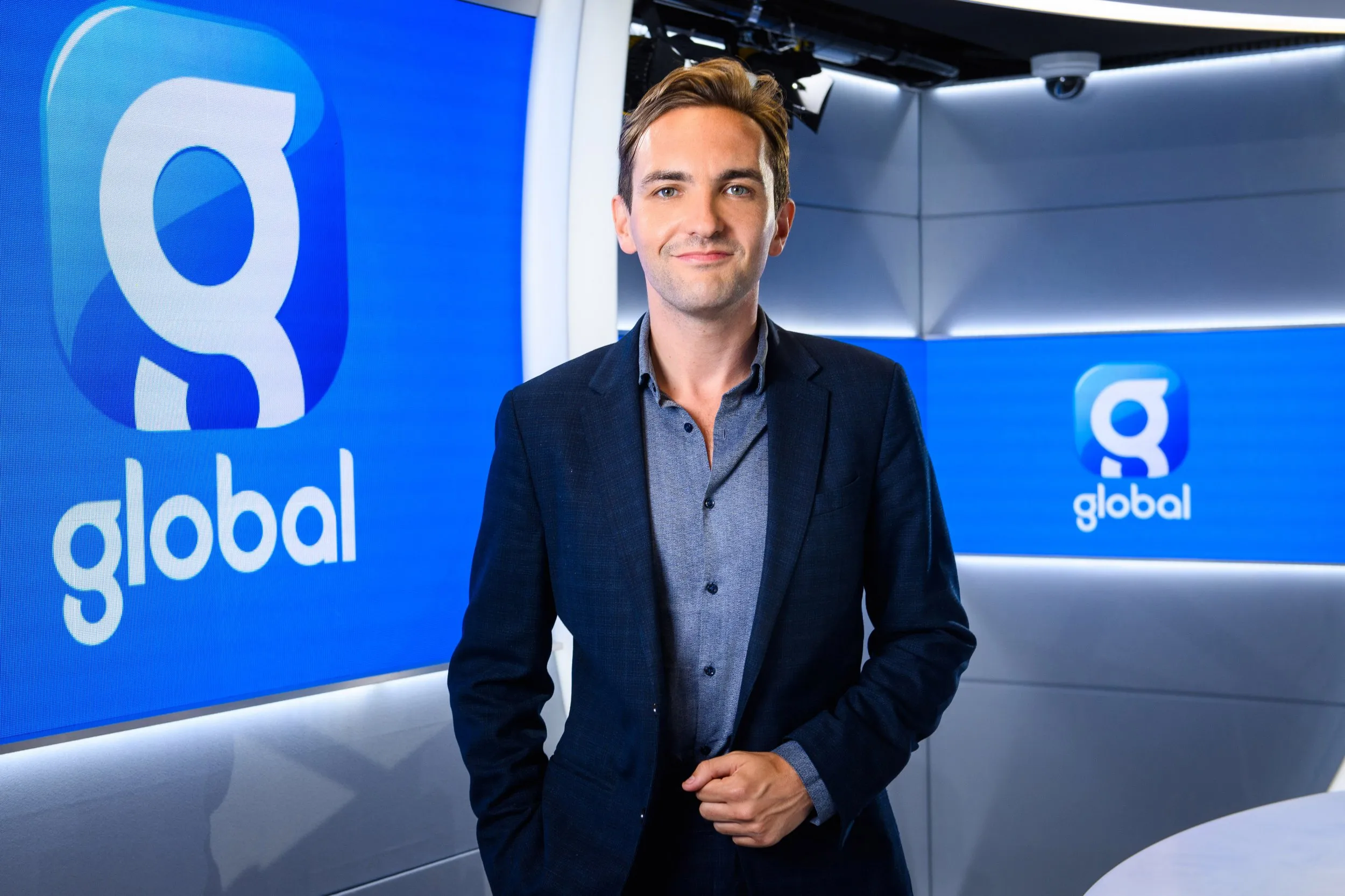
Lewis Goodall has built a notable career across British broadcasting. From early work behind the scenes at the BBC to becoming a political correspondent at Sky News, returning to BBC Newsnight, and later helping establish The News Agents podcast, his career reflects the changing nature of political journalism. Today, he is also known for his work with LBC and Global, where he combines reporting, interviews, analysis, and investigations.
His career is particularly interesting because it has developed alongside some of the most dramatic political periods in recent British history. Brexit, Labour’s internal struggles, general elections, the COVID-19 pandemic, and major debates about government policy have all featured prominently in his work.
Who Is Lewis Goodall?
Lewis Goodall is a British journalist, political broadcaster, reporter, and author. He has worked for major British news organizations and developed a reputation for explaining complicated political developments in a way that ordinary audiences can understand.
Sky News describes him as a political correspondent who has covered politics in Westminster and around the country. During his time there, he covered two general elections and a referendum while interviewing prominent political figures including Theresa May, Boris Johnson, Jeremy Corbyn, and other influential figures in Parliament.
Goodall’s career has not been limited to traditional television reporting. He has also worked on podcasts, written about politics, presented political programmes, and pursued investigative stories. This combination has helped him remain relevant as audiences increasingly consume news through digital platforms as well as television and radio.
Lewis Goodall’s Education and Early Career
Goodall studied History and Politics at St John’s College, Oxford. He graduated in 2010 and subsequently developed experience across politics, research, television, and journalism. Sky’s announcement of his appointment in 2016 noted that he had also worked in the United States Congress and at the Institute for Public Policy Research.
His early career demonstrates that political journalism is often built gradually. Rather than moving immediately into a prominent presenting role, Goodall gained experience through research and production work.
One of his early positions involved working at Granada Studios, where he wrote questions for University Challenge. He later worked at the Institute for Public Policy Research before joining the BBC in 2012. His BBC career included work connected with Daily Politics, economics and business reporting, and other BBC programmes.
These experiences gave him an important foundation. Understanding politics is one thing, but explaining political decisions to a television or podcast audience requires another set of skills. Goodall developed both.
His Time at BBC Newsnight
One of the most important stages of Lewis Goodall’s career came through BBC Newsnight. He joined the programme as a political researcher in 2014 and later became a reporter.
His role involved preparing for major interviews and working on political stories. Over time, he moved increasingly into visible reporting. His work also extended beyond Newsnight to other BBC output.
During his BBC career, Goodall reported on major international and domestic stories. He covered the Paris attacks in 2015 and conducted the final interview with former Labour politician Denis Healey before Healey died later that year.
The experience helped establish Goodall as a journalist capable of handling stories that required both political knowledge and on-the-ground reporting.
Moving to Sky News
In 2016, Goodall moved from the BBC to Sky News as a political correspondent. Sky announced his appointment in November that year, describing his previous experience at Newsnight and highlighting his work on major political stories.
The timing was significant. Britain had voted to leave the European Union in the 2016 referendum, creating an extraordinary period for political journalism.
Goodall became closely associated with coverage of Brexit and the political developments surrounding it. He also became increasingly recognized for his interest in elections and political data.
Sky notes that he helped present the network’s election coverage and has a particular interest in psephology, the study of elections.
That interest became an important part of his public profile. Rather than treating elections simply as competitions between political parties, Goodall often looks at voting patterns, demographic trends, regional differences, and the numbers behind election results.
Lewis Goodall and Political Analysis
Political journalism can sometimes become dominated by dramatic statements and daily controversies. Goodall’s style has often placed considerable emphasis on explaining what political developments actually mean.
His background in history and politics gives him a strong foundation for putting current events into context. Elections, leadership contests, government decisions, and changes in public opinion rarely happen in isolation.
This approach is particularly valuable when audiences are trying to understand complicated political stories. A headline may explain what happened, but political analysis needs to explore why it happened and what could happen next.
That combination of reporting and interpretation has become a defining feature of Goodall’s work.
His Book: Left for Dead?
Lewis Goodall is also an author. In 2018, he published Left for Dead?: The Strange Death and Rebirth of the Labour Party.
The book examines Labour’s changing fortunes during the 21st century. It looks at the party’s period of dominance under Tony Blair and its subsequent struggles, including the rise of Jeremy Corbyn. Sky identifies the book as Goodall’s first published work and describes it as an examination of the development of Corbynism and Labour’s transformation.
The book reflects Goodall’s broader interest in understanding political movements rather than simply reporting individual political events.
It also shows why his historical education has been useful throughout his career. Politics often makes more sense when current events are connected to developments that happened years or even decades earlier.
Returning to the BBC
After several years at Sky News, Goodall returned to the BBC in January 2020 as policy editor of Newsnight.
His return coincided with another extraordinary period in British public life. The COVID-19 pandemic soon became the dominant story across the country.
Goodall became one of the recognizable journalists covering the political and social consequences of the pandemic. His reporting examined issues involving schools, care homes, government policy, and the wider impact of the crisis.
One particularly notable area was the 2020 A-level grading controversy. His reporting on the examination grading crisis contributed to wider scrutiny of the government’s approach, and he was later nominated for an Orwell Prize for his journalism.
The episode demonstrated the influence investigative political journalism can have when reporting is combined with public attention and sustained scrutiny.
The News Agents Era
In 2022, Lewis Goodall took another major career step by leaving the BBC and joining Global to work on a new daily podcast with Emily Maitlis and Jon Sopel.
The result was The News Agents, which launched on 30 August 2022. The podcast brought together three experienced journalists to discuss major political and current-affairs stories.
The move represented an important change in the way audiences consume news.
Instead of relying only on television bulletins, listeners could hear detailed political discussion through a podcast. Goodall became particularly involved in analysis, investigations, and reporting.
The format also allowed him to explore stories in greater depth than a short television segment might allow. Podcasts provide more room for context, conversation, interviews, and extended analysis.
Lewis Goodall and LBC
Goodall has also become an important voice on LBC. In 2024, LBC announced that he would host Sunday with Lewis Goodall, a flagship Sunday morning politics programme. The show was designed to feature interviews with leading political figures, analysis, reporting, and discussion of the week’s major political developments.
This role further expanded his broadcasting career.
Radio offers something different from television. The absence of a visual component puts greater emphasis on conversation, questioning, explanation, and the ability to keep listeners engaged through words alone.
For Goodall, it also created another opportunity to speak directly with politicians and audiences about the issues dominating British politics.
Investigative Journalism and the Afghan Data Leak Story
One of the most significant stories associated with Goodall in recent years concerns a major Ministry of Defence data breach involving Afghan applicants connected to the UK’s Afghan Relocations and Assistance Policy.
In 2023, Goodall said he received information from a Whitehall source about what was described as a catastrophic data breach. The dataset reportedly contained names and contact details of people who had applied for asylum under the relevant Afghan resettlement programme.
The story became particularly significant because of the legal restrictions surrounding its publication.
Goodall wrote publicly about spending around 23 months dealing with the consequences of the case and argued that it raised serious questions about press freedom, secrecy, government accountability, and democratic oversight.
The reporting eventually earned major recognition. In December 2025, LBC reported that Goodall won the Scoop of the Year award at the British Journalism Awards for his reporting on the Afghan data leak and the resulting secret resettlement arrangements.
The award marked an important moment in his career because it recognized not simply a political interview or television appearance, but sustained investigative reporting.
Why Lewis Goodall Matters in Modern Journalism
Lewis Goodall’s career illustrates how journalism is changing.
A modern political journalist is no longer restricted to one medium. Goodall has worked in television, radio, newspapers, online journalism, podcasts, and investigative reporting.
That flexibility has become increasingly important as audiences move between different platforms. Someone might watch a political interview on television in the morning, listen to a podcast during the afternoon, and read an investigative article online later in the day.
Goodall’s career has developed across all these spaces.
At the same time, his work demonstrates the continuing importance of traditional journalistic skills. Research, source development, political knowledge, interviewing, fact-checking, and persistence remain central regardless of whether a story appears on television or a smartphone screen.
His Approach to Political Journalism
Goodall is particularly interested in the forces behind political events.
Rather than focusing solely on who won a political argument, his work often examines the underlying numbers, public opinion, institutional pressures, and strategic decisions.
His interest in elections is a good example. Election coverage can easily become a collection of campaign slogans and opinion polls. However, understanding voting behaviour requires examining constituencies, demographics, turnout, regional patterns, and historical trends.
This analytical approach gives his work a distinctive character.
Lewis Goodall’s Public Profile
Like many prominent political journalists, Goodall has attracted both praise and criticism.
Political journalism naturally involves disagreement. Journalists question politicians, challenge government decisions, and interpret controversial events. As a result, their reporting and commentary can attract criticism from people across the political spectrum.
Goodall himself has been involved in debates about journalistic impartiality. During his BBC years, he faced criticism over political commentary and his reporting. In 2024, The Guardian reported on his claims that BBC leadership had failed to adequately defend him during what he described as a political campaign against him.
These controversies are part of the broader debate about the role of journalists in modern political life.
They also demonstrate why political journalism remains challenging. Audiences want journalists to ask difficult questions, yet they may disagree strongly with the conclusions or framing of those journalists.
What Makes Lewis Goodall’s Career Interesting?
There are several reasons why Lewis Goodall has developed such a recognizable profile.
First, his career has crossed multiple generations of media. He began in traditional broadcast journalism and later became a prominent podcast journalist.
Second, he has covered major political turning points. Brexit, elections, the Labour Party’s internal battles, the pandemic, and government policy controversies have all shaped his reporting career.
Third, he combines journalism with analysis. His interest in elections and political history gives his work a wider perspective.
Finally, his investigative work shows a willingness to pursue stories over long periods. The Afghan data leak investigation is a strong example of how complicated journalism can require patience and persistence.
Lewis Goodall’s Continuing Influence
As of 2026, Goodall remains active across British political media. His work with The News Agents, LBC, and Global keeps him involved in some of the country’s most important political conversations. LBC continues to list him as a presenter, while his professional profile identifies him with The News Agents and Sunday with Lewis Goodall.
His career also reflects the growing importance of independent-looking digital formats within mainstream journalism.
Podcasts can provide a more conversational environment than television. Radio can create immediate interaction with listeners. Online investigations can reach audiences directly. Meanwhile, television remains important for major political events.
Goodall’s ability to operate across these formats gives him a broad platform.
Final Thoughts on Lewis Goodall
Lewis Goodall’s journey from political researcher and producer to prominent journalist, broadcaster, author, and investigative reporter is a fascinating example of how modern journalism can develop.
His career has included some of Britain’s most important political stories. From Brexit and Labour’s transformation to the COVID-19 crisis and the Afghan data leak, he has worked on stories that have affected political debate far beyond Westminster.
Perhaps the most interesting part of his career is the way he has adapted to changing media habits. He has moved comfortably between television, radio, podcasts, writing, and investigative journalism.
For audiences interested in British politics, Lewis Goodall represents a familiar modern journalistic voice. His work combines political reporting with analysis and an interest in understanding the forces behind major events.
As the media landscape continues to change, journalists who can investigate, explain, interview, and communicate across different platforms will remain valuable. Goodall’s career suggests that political journalism is not disappearing. Instead, it is finding new ways to reach audiences and make sense of an increasingly complicated political world.