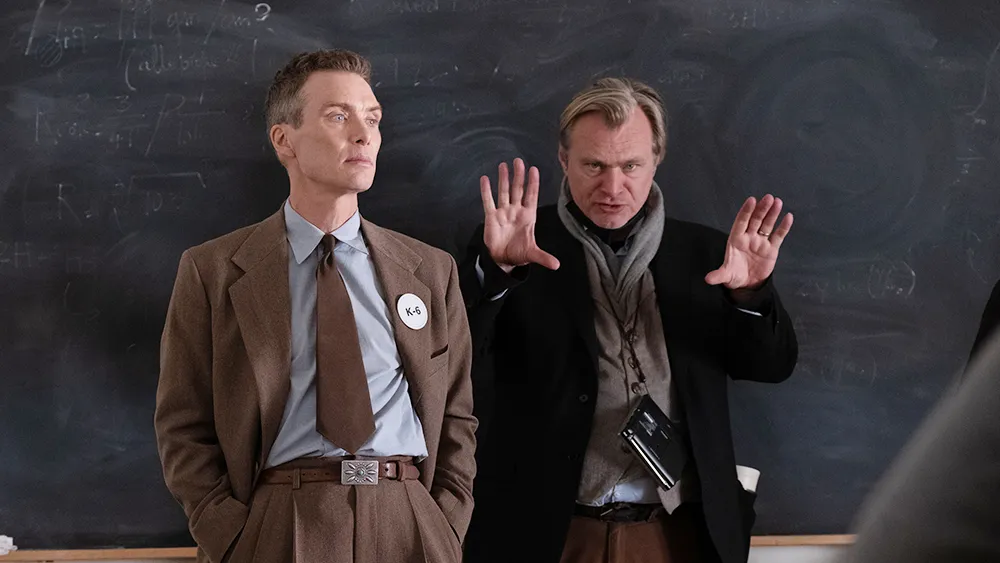
Christopher Nolan: The Visionary Filmmaker Who Redefined Modern Cinema
Have you ever watched a movie that left you thinking about it for days? If so, there’s a good chance Christopher Nolan had something to do with it. Known for his mind-bending storytelling, breathtaking visuals, and unforgettable characters, Christopher Nolan has become one of the most respected filmmakers of the 21st century. His movies challenge audiences to think beyond the surface while delivering thrilling entertainment.
From psychological thrillers to epic science fiction adventures, Nolan has consistently pushed the boundaries of filmmaking. His dedication to practical effects, nonlinear storytelling, and emotional depth has earned him worldwide recognition and numerous awards.
In this article, we’ll explore Christopher Nolan’s life, career, filmmaking style, greatest movies, achievements, and lasting impact on the film industry.
Who Is Christopher Nolan?
Christopher Nolan is a British-American filmmaker, screenwriter, and producer best known for directing intelligent blockbuster films that combine artistic storytelling with commercial success. His work often explores themes such as time, memory, identity, morality, and human ambition.
Unlike many directors who rely heavily on computer-generated imagery (CGI), Nolan prefers practical effects, real locations, and large-format film cameras. His dedication to cinematic authenticity has made him one of Hollywood’s most influential directors.
Early Life and Childhood
Christopher Edward Nolan was born on July 30, 1970, in London, England. His father worked in advertising, while his mother was an American flight attendant and English teacher.
From a young age, Nolan showed an interest in storytelling and filmmaking. Inspired by classic science fiction movies and legendary directors, he began making short films with his father’s Super 8 camera when he was only seven years old.
Growing up between England and the United States exposed him to different cultures, which later influenced his storytelling style.
Education and Passion for Film
Nolan attended University College London (UCL), where he studied English Literature. Instead of enrolling in a film school, he spent much of his time using the university’s filmmaking equipment and participating in the school’s film society.
This experience allowed him to learn filmmaking through practice rather than traditional education. His early short films helped him develop the techniques that would later define his career.
The Beginning of Christopher Nolan’s Career
Christopher Nolan’s professional filmmaking journey started with low-budget independent films.
His first feature film, Following (1998), was made with a very limited budget. Friends volunteered as actors, and filming took place on weekends to reduce costs.
Although it was a small production, Following showcased Nolan’s talent for nonlinear storytelling and suspense. Critics praised the film, opening doors for larger opportunities.
Breakthrough with Memento
Christopher Nolan gained international recognition with Memento (2000).
The psychological thriller tells the story of a man suffering from short-term memory loss while trying to solve his wife’s murder. The movie is famous for its reverse chronological structure, forcing viewers to experience the protagonist’s confusion.
Memento became a critical and commercial success.
Its achievements included:
- Academy Award nominations
- Worldwide praise from critics
- Recognition as one of the greatest films of the decade
- Establishing Nolan as a visionary filmmaker
The film demonstrated that audiences were eager for intelligent, unconventional storytelling.
Entering Hollywood
Following the success of Memento, Christopher Nolan directed Insomnia (2002), starring Al Pacino, Robin Williams, and Hilary Swank.
The film proved Nolan could successfully handle major Hollywood productions while maintaining his unique storytelling approach.
Its success led Warner Bros. to entrust him with one of cinema’s most iconic superheroes.
Reinventing Batman
Christopher Nolan completely transformed superhero movies with Batman Begins (2005).
Rather than focusing solely on action, Nolan explored Bruce Wayne’s psychology, fears, and motivations.
The trilogy includes:
Batman Begins (2005)
This film introduced a realistic version of Gotham City and explored Batman’s origins.
The Dark Knight (2008)
Widely considered one of the greatest superhero movies ever made, The Dark Knight featured Heath Ledger’s unforgettable performance as the Joker.
The movie broke box office records and changed public perception of comic book films.
The Dark Knight Rises (2012)
The trilogy concluded with an emotional and epic finale that completed Bruce Wayne’s journey.
Together, these films redefined what superhero movies could achieve.
Christopher Nolan’s Unique Filmmaking Style
One reason Christopher Nolan stands apart from other directors is his distinctive creative approach.
Nonlinear Storytelling
Many Nolan films unfold in unexpected ways.
Instead of following a straightforward timeline, his stories often jump between different periods, requiring audiences to actively piece everything together.
Examples include:
- Memento
- Dunkirk
- The Prestige
Exploration of Time
Time plays a central role in many Christopher Nolan movies.
Examples include:
- Time dilation in Interstellar
- Dream layers in Inception
- Reverse entropy in Tenet
- Multiple timelines in Dunkirk
Rather than treating time as a simple progression, Nolan uses it as a storytelling device.
Practical Effects
Christopher Nolan strongly believes practical effects create a more authentic cinematic experience.
Instead of relying entirely on CGI, he often uses:
- Real explosions
- Full-scale sets
- Actual vehicles
- IMAX cameras
- On-location filming
This commitment adds realism and immersion to his films.
IMAX Filmmaking
Nolan helped popularize the use of IMAX cameras for feature films.
Movies like:
- The Dark Knight
- Interstellar
- Dunkirk
- Oppenheimer
feature breathtaking large-format sequences that maximize the theatrical experience.
Inception: A Dream Within a Dream
Released in 2010, Inception became one of Christopher Nolan’s most celebrated films.
The movie follows professional thieves who enter people’s dreams to steal secrets.
Its innovative concepts include:
- Shared dreaming
- Dream architecture
- Multiple dream layers
- Time distortion
The film’s ending remains one of the most discussed conclusions in cinema history.
Interstellar: Science Meets Emotion
In 2014, Christopher Nolan directed Interstellar, a science fiction masterpiece exploring humanity’s survival.
The film combines:
- Space exploration
- Black holes
- Time relativity
- Family relationships
- Human perseverance
Scientists praised its surprisingly accurate depiction of black holes, while audiences connected deeply with its emotional story.
Dunkirk: A Different Kind of War Movie
Rather than focusing on traditional battle scenes, Dunkirk (2017) tells the evacuation story from three interconnected perspectives:
- Land
- Sea
- Air
Each timeline progresses at a different speed, creating constant suspense.
The movie received widespread acclaim for its realism and innovative storytelling.
Tenet: Nolan’s Most Complex Film
Released in 2020, Tenet challenged audiences with its concept of inverted time.
The movie introduced:
- Reverse-moving objects
- Time inversion
- Parallel timelines
- High-concept action sequences
Although some viewers found it difficult to follow, others praised its ambition and originality.
Oppenheimer: A Career-Defining Achievement
Christopher Nolan’s Oppenheimer (2023) became one of the biggest critical successes of his career.
The film tells the story of physicist J. Robert Oppenheimer and the creation of the atomic bomb.
The movie impressed audiences with:
- Outstanding performances
- Emotional storytelling
- Practical visual effects
- Historical accuracy
- Stunning IMAX cinematography
Oppenheimer won numerous major awards and further strengthened Nolan’s reputation as one of cinema’s greatest directors.
Awards and Recognition
Throughout his career, Christopher Nolan has received countless honors.
His achievements include:
- Academy Awards
- BAFTA Awards
- Golden Globe Awards
- Directors Guild recognition
- Writers Guild nominations
- International film festival honors
Many critics consider him one of the defining filmmakers of modern cinema.
Frequent Collaborators
Christopher Nolan often works with the same talented actors and crew members.
Some of his most frequent collaborators include:
- Cillian Murphy
- Michael Caine
- Christian Bale
- Tom Hardy
- Anne Hathaway
- Kenneth Branagh
- Hans Zimmer
- Ludwig Göransson
- Emma Thomas (producer and Nolan’s wife)
These long-term collaborations contribute to the consistency and quality of his films.
Christopher Nolan’s Influence on Modern Cinema
Christopher Nolan has inspired an entire generation of filmmakers.
His influence can be seen through:
- Intelligent blockbuster storytelling
- Greater use of practical effects
- Increased IMAX filmmaking
- Complex narratives
- Original screenplays
- Audience trust in sophisticated storytelling
He proved that blockbuster films can be both commercially successful and intellectually engaging.
Why Audiences Love Christopher Nolan
Christopher Nolan has built a loyal global fanbase because his films offer much more than entertainment.
Fans appreciate:
- Thought-provoking stories
- Memorable characters
- Incredible visuals
- Emotional depth
- Original concepts
- Exceptional sound design
- High replay value
Each viewing often reveals new details that audiences may have missed before.
Interesting Facts About Christopher Nolan
Here are some fascinating facts about Christopher Nolan:
- He holds both British and American citizenship.
- He prefers shooting on film instead of digital cameras.
- He avoids excessive CGI whenever possible.
- Many of his films feature nonlinear storytelling.
- He frequently collaborates with his wife, producer Emma Thomas.
- His movies have earned billions of dollars at the global box office.
- He is known for maintaining a high level of secrecy during production.
- His films often encourage audiences to interpret events in different ways.
Christopher Nolan’s Legacy
Christopher Nolan has transformed the way audiences experience cinema. By blending philosophical ideas, emotional storytelling, and groundbreaking filmmaking techniques, he has created a body of work that continues to inspire viewers and filmmakers alike.
Whether exploring dreams, space, history, or superheroes, Nolan consistently delivers stories that challenge expectations while remaining emotionally compelling. His commitment to practical filmmaking and original ideas has helped redefine what modern blockbuster movies can achieve.
As new generations discover his films, Christopher Nolan’s influence will undoubtedly continue to shape the future of cinema for years to come.
Conclusion
Christopher Nolan is far more than a successful movie director—he is a visionary storyteller whose work has changed the landscape of modern filmmaking. From Following and Memento to The Dark Knight, Inception, Interstellar, Dunkirk, Tenet, and Oppenheimer, his career is marked by creativity, ambition, and a relentless pursuit of cinematic excellence.
His ability to combine complex narratives with emotional depth has earned him the admiration of audiences, critics, and fellow filmmakers around the world. As Christopher Nolan continues to create innovative films, his legacy as one of the greatest directors of his generation remains firmly established.