Greenhouse Gases: What They Are, Why They Matter, and How We Can Actually Make a Difference
Have you ever wondered why the planet keeps getting warmer even though most of us aren’t doing anything drastically different in our daily lives? Or why “greenhouse gases” get blamed for everything from melting ice caps to extreme weather swings? This topic gets thrown around a lot, but many people still don’t truly understand what greenhouse gases are or why they carry so much weight in climate discussions. So today, let’s break it all down in a clear, expert-backed, but laid-back way that makes the science easy to digest.
In this guide, you’ll learn what greenhouse gases actually do, where they come from, how they affect our climate, and what solutions genuinely make a difference. And yes — we’ll look beyond the usual surface-level explanations and dig into details that matter.
1. Understanding Greenhouse Gases: The Basics Explained Simply
Greenhouse gases are essentially the atmospheric chemicals that trap heat. Think of them as a giant, invisible blanket around Earth. Without them, our planet would be so cold that sustaining life would be nearly impossible. But when there’s too much of this blanket, the planet warms up more than it should, causing problems we’re all familiar with by now. In simple terms, these gases aren’t inherently “bad,” but they become an issue when they accumulate beyond natural levels.
The most common greenhouse gases include carbon dioxide (CO₂), methane (CH₄), nitrous oxide (N₂O), ozone (O₃), and water vapor. Each of them plays a different role, lasts for a different amount of time in the atmosphere, and varies in how much heat it traps. For example, carbon dioxide sticks around for centuries, while methane doesn’t last as long but traps significantly more heat during its short lifespan. This difference is why some gases are considered more dangerous than others despite being less common.
It’s also important to note that greenhouse gases naturally occur through processes like volcanic eruptions, plant respiration, and ocean activity. However, what shifted everything dramatically was the industrial revolution. Human activities suddenly began releasing greenhouse gases faster than the environment could naturally absorb them. That imbalance is why scientists around the world emphasize the urgency of reducing emissions today.
2. How Greenhouse Gases Actually Work in Earth’s Atmosphere
To understand the whole climate issue, it helps to visualize how greenhouse gases function. When sunlight reaches Earth, some is absorbed by the surface and warms the planet. The rest is supposed to radiate back into space as infrared energy. Greenhouse gases, however, intercept some of that outgoing heat and re-emit it in all directions — including downward. This process traps heat, causing the atmosphere to warm over time.
What’s fascinating is that every greenhouse gas absorbs energy at different wavelengths. This means each gas has its own “heat-trapping fingerprint,” influencing how much warming it can cause. For instance, methane and nitrous oxide absorb infrared energy more efficiently than carbon dioxide, even though CO₂ is far more abundant. That’s why climate scientists use the concept of “global warming potential” (GWP) to compare them on equal footing.
Another key factor is the lifespan of these gases. Carbon dioxide can remain in the atmosphere from hundreds to thousands of years, making it a long-term climate driver. Methane, on the other hand, only lasts around twelve years, but during that time, it warms the planet over twenty-five times more than CO₂. Understanding these differences is important for developing realistic climate strategies — we can’t treat all gases the same way or assume one solution fixes everything.
3. Major Sources of Greenhouse Gas Emissions Around the Globe
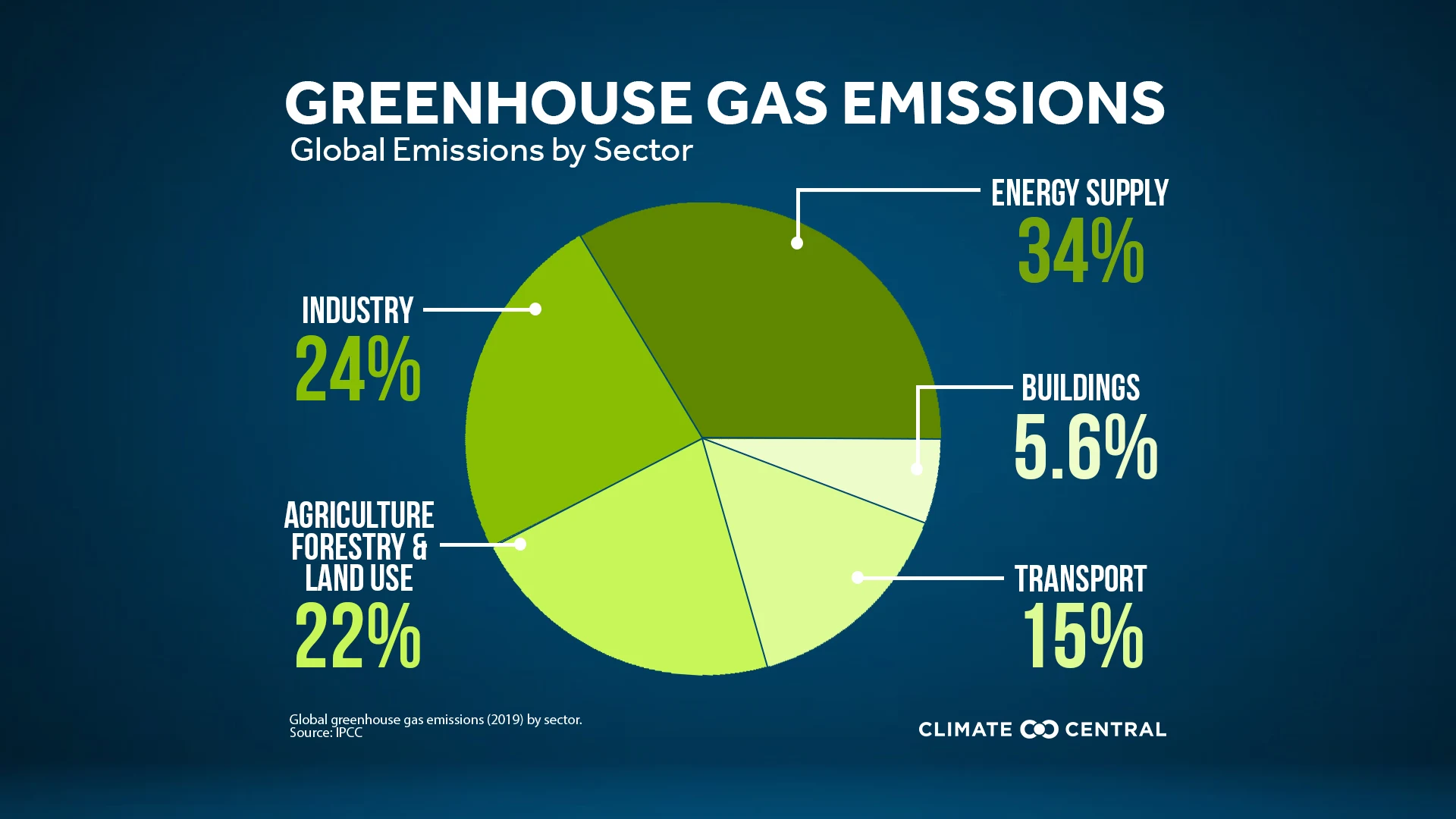
When people talk about greenhouse gas emissions, they often focus only on factories or cars. But the reality is far more interconnected. Multiple industries contribute to atmospheric greenhouse gases, and many of them fly under the radar. The four biggest sources are energy production, agriculture, industrial processes, and transportation. Each one plays a major role, and together, they shape the climate crisis we’re dealing with today.
Energy production — especially the burning of coal, oil, and natural gas — is the largest contributor. Every time we generate electricity, heat buildings, or refine fuels, carbon dioxide pours into the atmosphere. Even though renewable energy is growing fast, fossil fuels still dominate global energy markets. This alone keeps emissions at dangerously high levels despite advancements in greener technologies.
Agriculture is another significant contributor. Livestock such as cows and sheep produce methane through digestion. Manure management, rice cultivation, and fertilizer use also release methane and nitrous oxide. Many people don’t expect agriculture to be such a major factor, but it produces more methane than most industries. When you combine this with industrial chemical production, deforestation, and waste management systems that release both methane and CO₂, the picture becomes clearer: greenhouse gas emissions are deeply embedded in almost everything society does.
4. Carbon Dioxide: The Most Talked-About Greenhouse Gas
Carbon dioxide gets the most attention, and for good reason. It’s the most abundant human-generated greenhouse gas and the one responsible for most of the long-term warming we’re seeing. Every time we burn fossil fuels or clear forests, massive amounts of CO₂ enter the atmosphere. While natural carbon sinks like oceans and forests absorb some of it, they simply can’t handle the overwhelming volume produced today.
A big concern with carbon dioxide is its persistence. Once released, CO₂ doesn’t disappear quickly. Instead, it lingers for centuries, which means the impact of today’s emissions will affect many future generations. This long life gives CO₂ a kind of “climate memory,” making it one of the hardest gases to manage. Once it’s up there, cleaning it up becomes a monumental challenge.
Furthermore, CO₂ levels are rising at a speed the planet hasn’t seen for millions of years. This rapid increase is putting pressure on ecosystems, altering ocean chemistry, and intensifying extreme weather events. Although carbon dioxide isn’t the only greenhouse gas we should worry about, it remains the most important one to control if we want any chance of stabilizing global temperatures.
5. Methane: The Short-Lived but Extremely Powerful Greenhouse Gas
Methane doesn’t stay in the atmosphere as long as carbon dioxide, but during its short lifespan, it packs an enormous punch. It warms the planet at a rate many times faster than CO₂, which is why methane reduction has become a top priority for climate scientists and policymakers. Even small decreases in methane emissions can create noticeable, near-term impacts on global temperature trends.
The biggest methane sources include livestock farming, landfills, wetlands, and fossil fuel production. Natural gas infrastructure — such as pipelines and drilling sites — often leaks methane into the atmosphere. These leaks are problematic because methane is invisible and odorless until treated, making them hard to detect without specialized equipment. Recently, satellite technology has revealed large methane plumes that were previously unknown, proving that methane leakage is a far bigger issue than many assumed.
One promising aspect of methane reduction is that solutions are relatively cost-effective. Fixing gas leaks, improving waste management, adjusting livestock diets, and capturing methane at landfills can all significantly decrease emissions. While CO₂ reduction often requires huge industrial changes, methane mitigation can be faster and cheaper, providing immediate climate benefits.
6. Nitrous Oxide and Other Less-Discussed but Influential Greenhouse Gases
Nitrous oxide might not get as much press as carbon dioxide or methane, but it is incredibly potent. This gas has a global warming potential hundreds of times higher than CO₂ and can linger in the atmosphere for over a century. Its primary sources include agricultural fertilizers, industrial chemicals, and combustion processes. As global food demand grows, so does fertilizer use, and that makes nitrous oxide a rising concern.
One major issue is that nitrous oxide doesn’t just trap heat — it also contributes to ozone depletion. This makes it a unique double threat in terms of climate and environmental impact. It’s one of the few greenhouse gases that affects both the lower atmosphere (where warming happens) and the stratosphere (where the ozone layer protects us from UV radiation). Despite being less abundant, this dual impact earns nitrous oxide a place among the most worrisome greenhouse gases today.
Other less-discussed gases include fluorinated gases used in refrigeration, air-conditioning systems, and industrial applications. These synthetic gases have extremely high warming potentials — sometimes tens of thousands of times stronger than CO₂. While they’re released in smaller quantities, their heat-trapping ability makes them critical targets for regulation. Many countries are phasing out older refrigerants to minimize their impact on the climate.
7. The Real-World Consequences of Rising Greenhouse Gas Levels
Even though the science behind greenhouse gases can feel abstract, the consequences are very real. Rising greenhouse gas concentrations directly fuel climate change, which manifests through extreme heat waves, stronger storms, shifting seasons, and unpredictable weather patterns. These changes affect everything from agriculture to public health to infrastructure stability.
Perhaps the most visible impact is global temperature rise. The planet has already warmed significantly, and greenhouse gases are the driving force behind this trend. Increased heat leads to melting ice caps, rising sea levels, and stress on freshwater systems. Communities living in coastal regions are especially at risk, facing erosion, flooding, and saltwater intrusion that damages drinking water supplies.
Greenhouse gases also contribute to ocean acidification, which disrupts marine life and threatens global fisheries. As CO₂ dissolves into seawater, the chemistry shifts, making it harder for organisms like corals, mollusks, and some plankton to survive. These species form the backbone of marine ecosystems, so their decline has ripple effects throughout the entire food chain.
8. Why Reducing Greenhouse Gases Is More Urgent Than Ever
The urgency of reducing greenhouse gases isn’t just a scientific recommendation — it’s a practical necessity. Every passing year without significant reductions makes the challenge steeper. The longer we wait, the more extreme the consequences become, and the harder it is to reverse or slow down the damage.
One reason urgency matters is because climate systems have tipping points. These are thresholds where changes become self-reinforcing and irreversible on human timescales. For example, if ice sheets melt too much, they may not recover even if temperatures later stabilize. Similarly, the thawing of permafrost can release massive amounts of methane, accelerating warming even further. Avoiding these tipping points requires quick, decisive action.
Additionally, delaying action increases economic costs. Climate-related disasters are becoming more frequent and costly, affecting industries, communities, and governments worldwide. From wildfire destruction to agricultural losses, the financial burden of climate change grows every year. Reducing greenhouse gases now is far cheaper than dealing with the consequences later.
9. Practical and Achievable Solutions for Reducing Greenhouse Gas Emissions
While the issue is enormous, the good news is that many solutions already exist. Renewable energy is one of the most powerful tools we have. Solar, wind, hydropower, and geothermal energy continue to grow rapidly, replacing fossil fuels in electricity generation. As technology improves and costs drop, renewables are becoming more accessible for homes and businesses alike.
Improving energy efficiency is another major strategy. Small changes — like better insulation, LED lighting, and efficient appliances — can significantly reduce energy consumption. On a larger scale, modernizing industrial processes and upgrading transportation systems can create massive emission cuts. Electric vehicles, energy-efficient buildings, and smart grids all play an essential role.
Agriculture can also adopt sustainable practices. Reducing fertilizer use, improving soil health, and adjusting livestock feed can drastically lower methane and nitrous oxide emissions. Methane capture systems at landfills are another effective tool. Together, these solutions form a practical roadmap toward lowering greenhouse gas levels without sacrificing economic growth or quality of life.
10. What Individuals Can Do to Help Lower Greenhouse Gas Emissions
While big industry changes matter the most, individual choices also add up. One of the simplest ways to reduce your climate footprint is to cut down on energy use. Turning off unused electronics, adjusting heating and cooling systems, and choosing energy-efficient appliances create immediate benefits. When millions of people do these small things, they collectively make a big difference.
Transportation is another area where individuals can help. Choosing public transit, carpooling, biking, or walking whenever possible greatly reduces emissions. Electric vehicles are becoming more affordable, and hybrid models offer lower-emission alternatives for many households. Even something as simple as combining errands into one trip can reduce fuel usage.
Food choices also matter. Eating more plant-based meals, reducing food waste, and supporting sustainable local farms can lower greenhouse gas emissions from agriculture. You don’t have to become fully vegan — even small, consistent dietary changes can reduce methane and nitrous oxide emissions from livestock production. These actions, combined with smart shopping habits and recycling, make individuals part of the climate solution.
11. The Future of Greenhouse Gas Reduction: Innovations and Possibilities
As the world continues to innovate, new technologies and strategies for reducing greenhouse gases are rapidly emerging. Carbon capture and storage (CCS) is one promising area. This technology removes CO₂ directly from industrial facilities or even the atmosphere, storing it underground or transforming it into usable products. While still expensive, advancements are making CCS more feasible for wider adoption.
Another exciting development is green hydrogen. Produced using renewable energy, green hydrogen can power industries, transportation, and electricity systems without releasing greenhouse gases. Countries around the world are investing heavily in hydrogen infrastructure, signaling a potential shift toward cleaner fuels.
Artificial intelligence and smart systems also have a role to play. AI can optimize energy grids, reduce waste in manufacturing, improve agricultural practices, and monitor methane leaks from space. These technologies help create more efficient systems that naturally lower greenhouse gas emissions. While no single innovation is a magic solution, together they create a future where reducing greenhouse gases becomes more achievable than ever.
Conclusion: Understanding Greenhouse Gases Is the First Step Toward a Cleaner Future
Greenhouse gases may sound like a complex scientific topic, but once you break them down, the picture becomes clearer. These gases are essential for life, but only when balanced. Today, that balance has been disrupted, and restoring it is one of the biggest challenges humanity faces. However, with better awareness, smarter solutions, and unified global effort, progress is absolutely possible.
Whether you’re someone who wants to make personal changes or simply understand the topic better, learning about greenhouse gases is a meaningful first step. Every decision — from energy choices to lifestyle habits — plays a part in shaping the world we leave behind. And as the science shows, taking action sooner rather than later gives us the best chance at a stable and thriving future.